Friday, March 17, 2017

Ready to Go Book Display: March for Science

Welcome to our series, "Ready to Go!" Book Display. Once a month we'll highlight the latest or greatest for every age group that you can promote within your library or order for your collection. Here are some books that support the March for Science happening on April 22nd.

Recommendations for Adults:

Former host of Bill Nye the Science Guy challenges common misunderstandings about global warming while outlining the scientific community's potential for solving key energy and environmental problems. Also check out his other book: Undeniable: Evolution and the Science of Creation (Nov 2014).
A collection of artworks inspired by the lives and achievements of fifty famous women in science, technology, engineering, and mathematics, from the ancient world to the present, profiles each notable individual. 
A companion to the celebrated scientist's popular podcast and National Geographic Channel series combines the subjects of his favorite talks with comprehensive fun facts, thought-provoking sidebars, and vivid imagery.
Cites the essential contributions of millions of ordinary people who contribute to the scientific process by volunteering in cooperation with scientists to help collect and discover information, tracing the history of citizen scientists and how they are reshaping scientific awareness.
The Science Book (Jul 2014)
This book is a visual take on astronomy, biology, chemistry, geology, and physics with eye-catching artwork, step-by-step diagrams and illustrations that break down complicated ideas into manageable concepts.
A revelatory examination of the political tricks used to subvert scientific progress cites the notorious tactics and debates employed by government leaders to rationalize misconduct or promote non-scientific agendas.
A call to action, exposing the reality of how humankind has aided in the destruction of our planet and groundbreaking information on what you can do now.

Recommendations for Teens:


The Science of Science Fiction by Matthew Brenden Wood (Feb 2017)
Uncovers the real science behind classic and modern science fiction stories, exploring such topics as time travel, cloning, artificial intelligence, and life on other planets.
Other science related titles in the Inquire and Investigate series include: Genetics, Physics, Forensics, Chemistry and The Brain.
The creator of the webcomic xkcd.com provides hilarious and scientifically informative answers to questions that can never by physically solved, but are fun to think about. Also check out Thing Explainer: Complicated Stuff in Simple Words.
An introduction to how animals communicate, express feelings, use tools and work in social groups draws on scientific interviews and historical anecdotes to share related insights into the work of famous animal researchers and how modern understandings are revolutionizing old theories.
From lutes and owls to astronomy and evolution, this book explains how fifty scientific geniuses have shaped our understanding - and how they spent their free time.
A summary of today's environmental challenges also counsels teens on how to decode conflicting information, explaining the role of vested interests while identifying the sources behind different opinions and sharing suggested online resources to help teens make informed consumer choices.
50 Things You Should Know About Wild Weather by Anna Claybourne (Mar 2016)
Discusses mundane and extreme forms of weather including sandstorms, blizzards, and ball lightning. Other science related titles in the 50 Things You Should Know About series include: Space, Inventions, the Environment, and the Human Body.


Recommendations for Children:

At the Bottom of the World by Bill Nye (Apr 2017)
Traveling to Antarctica for a science competition, twelve-year-old Jack and his genius foster siblings, Ava and Matt, become caught up in a mystery involving a missing scientist. This is the first book in Jack and the Geniuses series.
A visual encyclopedia for children combines engaging facts and more than 1,200 images to chronicle key developments in the history of science and technology, from stone tools and simple machines to rockets and robots.
Unmasking the Science of Superpowers! by Jordan D. Brown (Sep 2016)
Did you know that advancements in robotics could soon make super-powered suits a reality? Or that some people have a rare gene that gives them superstrong bones? Hold onto your cape, you're about to become an expert on the high-flying science behind superpowers!

Maker Lab: 28 Super Cool Projects by Jack Challoner (Jul 2016)
Presents over two dozen simple science activities using food, common household objects, water and the outdoors.
Gravity by Jason Chin (Apr 2014)
Introduces the scientific principles of gravity using researched, simple, explanations of its essential role in the universe.
Ada Twist, Scientist by Andrea Beaty (Sep 2016)
Ada Twist is a very curious girl who shows perseverance by asking questions and performing experiments to find things out and understand the world.
Baby Loves Quarks! by Ruth Spiro (Oct 2016)
Offers a simplified explanation of quarks, protons, neutrons, atoms, and molecules. Also check out Baby Loves Aerospace Engineering!
I Am Jane Goodall by Brad Meltzer (Sep 2016)
Presents an illustrated biography of the conservationist and scientist known for her world with chimpanzees and her championing of animal rights. Also check out I Am Albert Einstein.
Star Stuff: Carl Sagan and the Mysteries of the Cosmos by Stephanie Roth Sisson (Oct 2014)
A biography of Carl Sagan focusing on his childhood and culminating in the Voyager mission and the Golden Record.
Full Steam Ahead! by Paul A. Reynolds (Sep 2014)
Twins Sydney and Simon learn about the water cycle and use science, technology, engineering, arts, and math to solve the problem of their stuck window and thirsty flowers.
Nick and Tesla's High-Voltage Danger Lab: A Mystery with Electromagnets, Burglar Alarms, and Other Gadgets You Can Build Yourself by Bob Pflugfelder and Steve Hockensmith (Nov 2013)
This story of tech-savvy siblings Nick and Tesla finds them constructing outrageous scientific devices to assist their brilliant government engineer uncle and rescue their missing parents. First in a series.

Friday, March 10, 2017

Save Hours Advertising Programs: The Beauty of a Template

It took me four years into my previous position to realize that I was advertising my programs all wrong. It was standard at that library to make a flyer for every upcoming program, so I followed it. And for each of these programs, I would make a brand new flyer.


I loved being creative, so it was one of the fun parts of my job. But it was hard to always come up with a great professional design -- and it was time consuming. When I started to try to find ways to be more productive, I realized that I needed to let go of my desire to create and make a template.

Art design was not my specialty, so it took many attempts to come up with a template that worked for all of our programs. Then we realized we needed a logo for our library (which I am proud to say that I did design with the help of my husband) and then my director hired someone with art skills who made an even better template than I did.

An amazing thing happened-- four, actually:

1. I Saved Hours of Work

There are people out there who can whip up an awesome flyer in no time, but that wasn't me. I can make a decent one but it required lots of creative energy and some trial and error until I came up with the perfect design. But with our template, I could make a new flyer in minutes and know I would immediately be happy with it. That's a lot of precious time saved!


2. Everyone Used the Template

With the new design, my coworkers were able to easily use it, too. Now everyone, even those who felt they didn't have any artistic skills, could make a flyer for their own program. (Or I could easily delegate this project to someone else who needed something to do.) There were a few hurdles for us to jump through (I did teach some of them how to use our art program) but the end result was something with which we all could be happy. And I like teaching, so I didn't mind those sessions at all.

3. We Advertised More

Having a template and an easy way to make flyers meant we could bang them out quickly. We also made a template for our website slider, so it was really easy for us to constantly update the website with the current information. Before, we had to constantly change our design to fit whatever medium we were using, but with these templates, it was easy to adapt the designs accordingly.

4. We Established a Professional Library Identity

Once we had a great template and used it consistently, we realized we had established an identity. There was no question what was a library flyer and what was a community flyer. We also gave a united front -- every department used the same template in the same artistic style, so we were providing the consistent message across the board.

Template Example

Below is an example of the template we used at my previous library. The top always began with a short title in the same font. Below it was the date and time. We included an image of what the program would be about, then a short description. In the bottom header is the library location and contact information. I no longer had to worry that I forgot something essential because it was standard on all our templates.


Do you have any templates to share? We would love to see them in the comments.


Like this post? You might want to check out:

     Catch Patrons' Attention with These 7 Easy Flyer Tips
     Canva: Make Easy Designs In Little Time
     5 Secret Tricks to Using Canva like a Pro!

Friday, March 3, 2017

Warning! Warning! Tornado! How to Protect Patrons

Two summers ago, I held a teen program at the local administration building to decorate cupcakes. It was all going well, until my phone beeped. It was a Tornado Watch notification. Suddenly, I was responsible for twelve lives and I realized -- I wasn't trained for this.


Wind whipped through the trees and rain pounded our windows so hard that water was seeping in through the seams. We happened to have a janitor nearby, who kept mopping up the floor. Hail even made an entrance for a brief time. Ten minutes in, a grandfather came bursting through the door, saying there's a tornado coming, and took his two granddaughters home.

At that point, I was trying to make a plan for what I would do if the watch upgraded to a warning. Where would I take the kids? I knew that being near windows was the last place we wanted to be (and we had a wall of windows on both sides of our room), but I didn't even know if the building I was in had a basement nor how to get there. I had to leave the program (luckily, we hired a cake decorator, so no one noticed) to go investigate and learned we didn't have access to the lower floor. Now what? Thankfully, the storm cleared up before the end of our program. We didn't get the tornado, but we had a microburst that left damage around the area. Trees and limbs had fallen, hail left damage on cars, and power lines were down. Parents had a difficult time trying to get back to get their kids but most importantly, no one was hurt, especially the teens in my care. 

But I'll never forget that day and how unprepared I felt. It is rare for a tornado to come through our state, though we get plenty of warnings during the summer/fall tornado season. But I realized that was no excuse for me not having a safety plan in place, in case we do get a tornado warning. So, I did some research afterwards, and I thought I'd share it in this article.

Tornado Warning Signs

  • Mobile Alerts

Many cell phone networks partner with the national weather service to automatically send you emergency alerts that include life threatening weather. You can also sign up with any weather website to get mobile alerts, emails or phone calls for all types of weather. Tornadoes aren't always predictable, but at least you'll be in the know if your area gets a tornado watch (it is possible) or warning (it is in your area, take cover).

  • Large Hail
  • Dark, Often Greenish Sky
  • Loud Roar, Similar to a Freight Train
  • Large, Dark, Low-Lying Cloud (particularly if rotating)

Any of these above signs may happen, or none of them. Tornadoes can be stationary or move up to 70 mph. (The average is 30 mph) If you have a tornado watch in your area, you'll want to be on a lookout for these signs.

What to Do

The Storm Prediction Center has tips they give to school administrators that can work for libraries, too. There is no guarantee place of safety if a tornado comes through, but there are precautions you can take:

  • Go Low

Move patrons to your lowest level. However, note that time might be of the essence, so if the basement is too far (you might have 2/3 minutes, you might have no warning at all), find closer places you can direct them.

  • Avoid Windows, Use Walls

Keep patrons away from windows. The more interior they can get, the better. Closets and hallways are good places, especially if there is no time to go lower. 

  • Flying Debris is Deadly

Instruct patrons to crouch low and cover the back of their head. Going under tables and covering up with any handy material (Rug mat? Cloth? Coats?) may also help protect from debris.

  • No Power

Be prepared that you may lose power, so your electronic announcement system may not work. Have another plan in place for how you will notify patrons.

  • Avoid Large Rooms

If you are in a location with a gymnasium or lunch room, avoid these areas. The lack of roof support make these places a poor shelter.

  • Look for Rooms with NO Heavy Objects Above, If Possible

Pay attention to what is above you. This might be a moot point since libraries have heavy bookshelves throughout, but if you have a section of the library which is below offices, that would be safest place to go if a tornado rips through your building.

  • Plan for All Patrons.

Have a plan in place for disable patrons, parents with kids strapped into strollers...

  • Know Your County/Parish

Do you know what county/parish your library is in? Make sure you know it ahead of time so you can easily follow weather bulletins. You might also want to print out a map of the area if you are unfamiliar and keep it handy in your safety location.

  • Survey Your Building

If you are hosting a program in an unfamiliar location, arrive early to investigate. Where is the lowest part of the building? Where are all exits? How do you get to the bathroom? All the necessities so you are prepared in case you get that alert to take cover.

Please Share!

Does your library have a tornado safety plan? If so, please share in the comments below.

Resources:

Friday, February 24, 2017

Partnership Incentive Award: Libraries and Free Driving Tests

Does your library offer free driving tests (car, motorcycle, and commercial) to your patrons?

If not, then you probably haven't heard about an awesome partnership between libraries and Elegant E-Learning. We're excited to highlight them today for two reasons:


1. Elegant E-Learning offers a free online driver's ed to libraries and their patrons. It is also ad-free and really easy to setup, with a special URL with your library's name. They do not keep information and there is no authentication needed. Best of all - these driving tests not only help teens and new drivers with preparing for their first driver's license, but they also provide tests for motorcycles and commercial vehicles. So many patrons can benefit from this!

2. And, from now until May 1st, 2017, every library who signs up will be automatically added into a $500 drawing. Five lucky libraries (and that's public, school, and academic libraries) will be selected.

So, if there is anything you do today, why not check out their website and sign-up? In May, you might be really thankful that you did this.

Full disclosure: I should mention that a few months ago, Elegant E-Learning's founder, Andrei Zakhareuski, contacted me and asked for ideas on how he can reach more libraries. We had a great conversation and the $500 drawing was one of the ideas that came out of it. (Thanks to my background with trying to get teens to participate in programs.) I really hope this idea helps many libraries participate! If you were always meaning to add this to your website, now is the time to do it.

(I also want to note that he did not ask me to write about his program nor paid me to do it. I am happy to share this partnership because I really think it'll benefit everyone.)

Friday, February 17, 2017

Ready to Go Book Display: Yoga

Welcome to our series, "Ready to Go!" Book Display. Once a month we'll highlight the latest or greatest for every age group that you can promote within your library or order for your collection. I think many of our stressed out right now, so let's try a relaxing yoga display.

Recommendations for Adults:

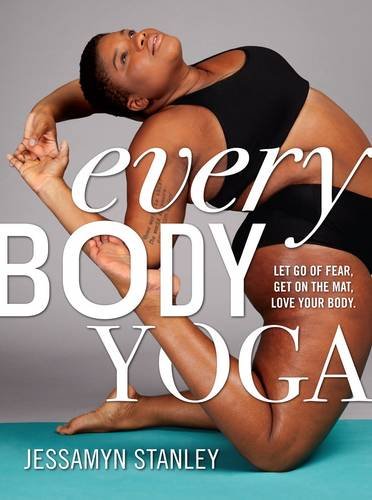
Every Body Yoga by Jessamyn Stanley (Apr 2017)
This book shows us that yoga isn't about how one looks, but how one feels, with yoga sequences like "I Want to Energize My Spirit," "I Need to Release Fear," and "I Want to Love Myself."
This book features full-color yoga pose portraits of more than 80 practitioners of all ages, shapes, sizes, backgrounds and skill levels - real people with real stories to share about how yoga has changed their lives for the better.
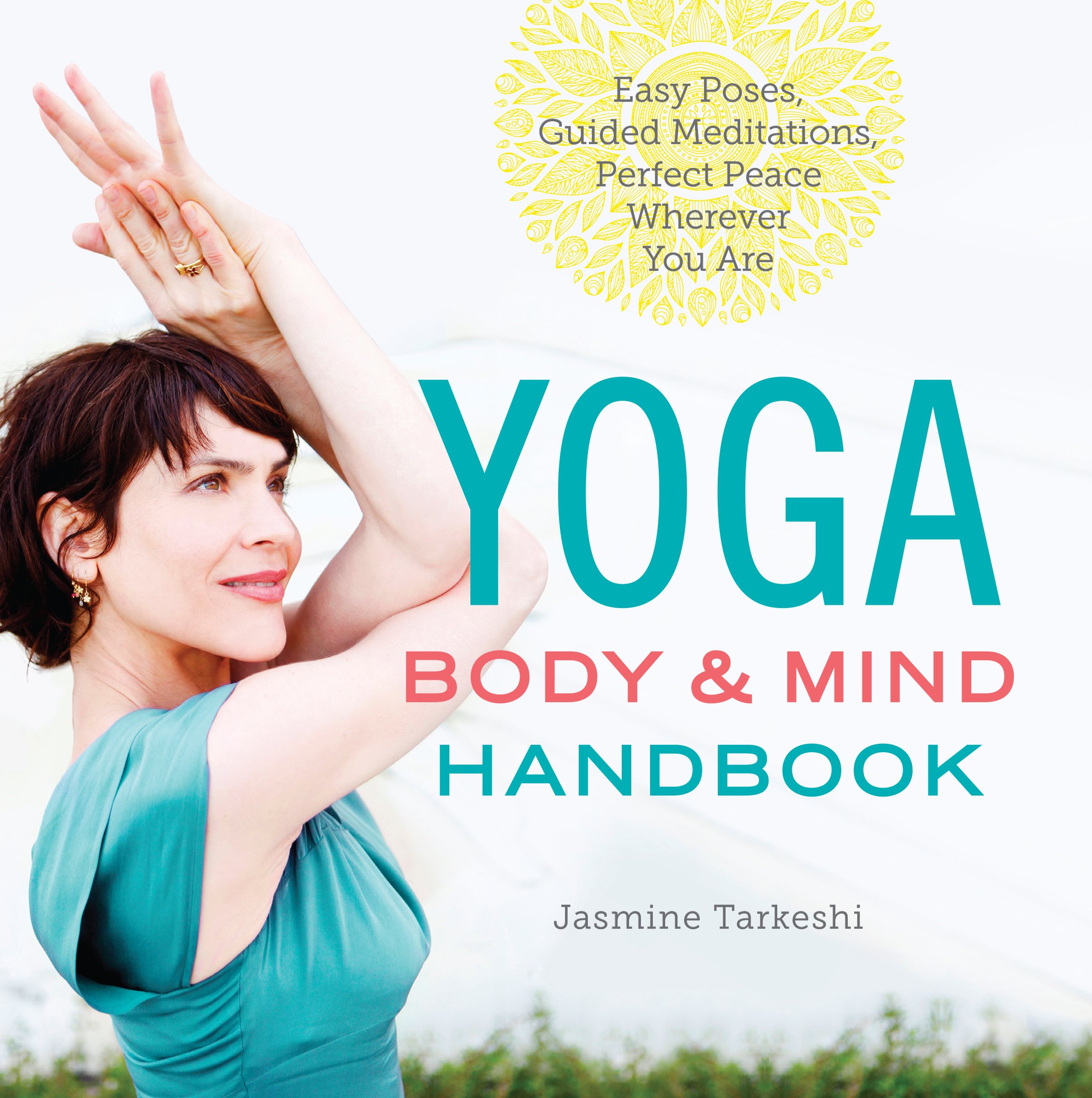
Yoga Body and Mind Handbook by Jasmine Tarkeshi (Apr 2017)
In this book specifically with the beginner in mind, yoga teach Jasmine Tarkeshi gives an introduction to essential yoga poses, breathing techniques and meditations.
Corpse Pose by Diana Killian (Apr 2008)
When she inherits the Sacred Balance yoga studio from her aunt, A.J. Alexander, along with her actress mother and a handsome detective, must discover who wanted her aunt dead before A.J. becomes the next target. This is the first book in the Mantra for Murder mystery series.
2,100 Asanas: The Complete Yoga Poses by Daniel Lacerda (Nov 2015)
In this collection of photographed yoga Asanas each pose is accompanied by the name of the pose in English and Sanskrit, a description of the modification, the Drishti point (eye gaze), the chakras affected and its benefits.

Yoga for Cats by Christienne Wadsworth (Apr 2016)
This hilarious faux how-to manual demonstrates the benefits of a daily yoga practice for felines.
Doga: Yoga for You and Your Dog by Mahny Djahanguiri (Jun 2015)
Classic yoga poses are adapted to include your furry friend.
Yoga 365 by Susanna Harwood Rubin (Oct 2016)
This book presents a year's worth of daily readings that invite yoga lovers of every skill level to bring the inspiration they experience on their mats into their everyday lives.
30-Minute Yoga by Viveka Blom Nygren (Jan 2011)
This guide with photos provides all the information one needs to do an effective 30-minute workout that can be tailored to the reader's specific needs.


Recommendations for Teens:

Yoga for Your Mind and Body by Rebecca Rissman (Apr 2015)
Presents yoga techniques and poses to promote brain power, stress relief, strength, and fitness.
Yoga Girls' Club: Do Yoga, Make Art, Be You by Tiffani Bryant (Feb 2015)
This is an interactive workbook format that introduces girls to yoga and meditation and offers frequent opportunities for self-reflection through short drawing and writing exercises.

Recommendations for Kids:


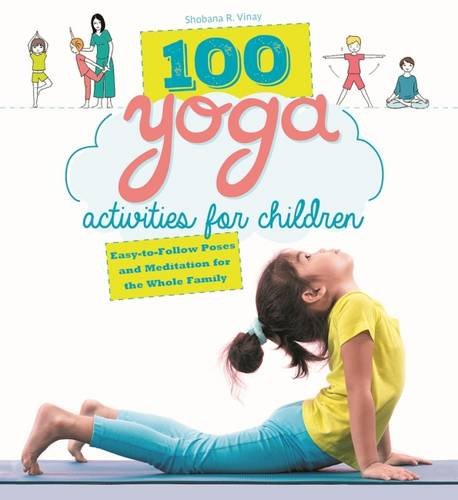
100 Yoga Activities for Children by Shobana Vinay (Apr 2017)
Parents can learn different ways to introduce their children to yoga.
Yoga Bunny by Brian Russo (Dec 2016)
Wanting to unwind with yoga at the end of a hardworking but beautiful day, Bunny practices his poses and wishes that his busy friends could realize that yoga would help them through their stressful routines.
I am Yoga by Susan Verde (Sept 2015)
As a young girl practices various standard yoga poses, she imagines herself as a tree touching the sky, a playful dog, a warrior, and more while relaxing and seeing how she fits into the world.

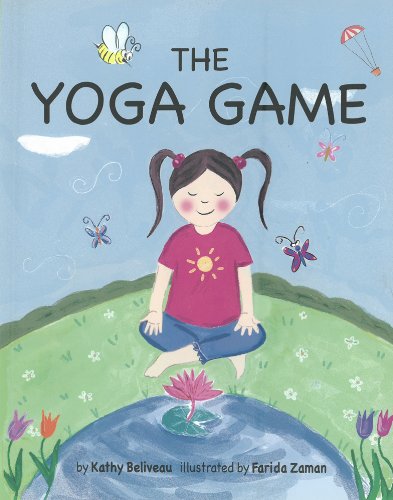
The Yoga Game by Kathy Beliveau (Nov 2010)
This book invites children to play with the words, guess the riddles and enjoy an actual yoga practice. Be sure to also check out The Yoga Game by the Sea and The Yoga Game in the Garden.
Good Night Yoga by Mariam Gates (Apr 2015)
A bedtime book for children to practice yoga before going to sleep. Start the day with the follow up book Good Morning Yoga.
Zach and Lucy and the Yoga Zoo by the Pifferson Sisters (Feb 2016)
Siblings Lucy and Zach set up their own yoga studio in the basement of their apartment building.
A Morning with Grandpa by Sylvia Liu (Apr 2016)
Curious and energetic Mei Mei attempts t'ai chi forms as her grandfather demonstrates them, then tries to teach him basic yoga poses.
ABC Yoga by Christiane Engel (Sept 2016)
Pairs illustrations of simplified yoga poses with alphabetized animals and objects in a colorful introduction to both the alphabet and the practice of yoga that incorporates playful rhymes that explain each movement.

Friday, February 10, 2017

Libraries Resist


Today is a short post but an important one. With the current political environment here in the US, our profession's core values are at stake. Thankfully, the Que(e)ry Librarians started a Google Document with lots of different resources to help libraries and library works in the resistance. Their goal is to help libraries answer the question: How do we help communities made (more) vulnerable by the new administration?

You can access their Google Document here: bit.ly/LibrariesResist. You can also follow them on Facebook and Twitter.

In the document, you'll find many resources for these topics:

  • Privacy, Surveillance, and Security
  • Free Speech, Protests, Demonstrations
  • Fake News, Propaganda, Fact Checking, Media Literacy
  • Civil and Human Rights
  • Library/Government Relations and Advocacy
  • Equity, Diversity and Inclusion in Libraries
  • Preserving Vulnerable Data and Collections
  • Archiving Resistance History
  • Resisting in Library Work
  • Literature and Art of Resistance
  • Resources for Children, Teens, Young Adults
  • Immigration, Refugees, and Citizenship
  • Multilingual, Translation, and Language Education
  • Accessibility, Disability, Assistive/Adaptive Technologies
  • Library Programs, Displays, Exhibits
  • Reference and Public Service
  • Cataloging, Metadata, Collecting and Acquisition
  • Net Neutrality, Open Access, Fair Use
  • Labor and Staffing
  • Sustainable Libraries
  • Social Media
This is a work in progress, but we applaud the Que(e)ry Librarians for their hard work. It is a great place to start when learning about your rights and to find great resources to recommend to patrons. It is going to be a long four years, but we're more powerful working together. #LibrariesResist

Friday, February 3, 2017

My Life on a YALSA Committee


I've had the honor of being a member of the 2016 and 2017 YALSA Quick Picks for Reluctant Young Adult Readers selection committee. Let me share with you a bit about our committee and what it's really like to be a member.

What is the purpose of this selection list?

The purpose of our list is to identify books for recreational reading for young adults (ages 12-18) who, for whatever reasons, do not like to read.


What's the difference between a selection committee and an award committee?


Quick Picks is a selection committee, the public (librarians like you!) can nominate titles and our list of what has been nominated is updated regularly throughout the year on YALSA's website. When our committee meets our meetings are open to the public and any conference attendees, including publishers can drop in and share about the books we are discussing.

An awards committee is much more private. Their nominations and meetings are kept closed to the public, conference attendees and YALSA members, and only the final winner and honor titles are revealed. The public is still encouraged to nominate titles for the committee to consider.

Both types of committees have to follow YALSA's Social Media Policy which limits posting reviews or ratings of any books that are nominated.


What kinds of books do you look at for this list?

In order to be eligibile for our list the book needs to have been published in the United States from July to December of the previous calendar year. (Books on our 2017 list were published between July 2015 and December 2016.) Our committee looks at fiction, non-fiction, graphic novels, and manga.


How did you become a member of this committee?

You must be a YALSA member. Members of selection committees are appointed by the YALSA President-elect. In order to apply you need to fill out the Committee Volunteer Form, answer questions on your reading and involvement with teens and submit your resume. When I applied I volunteered for Quick Picks as well as the Alex Awards, Morris Awards, Best Fiction, and Popular Paperbacks committees. I needed to reapply for my second year.


What are your responsibilities as a member of this committee?

"Committee members are expected to participate in the nomination process, to evaluate a large number of books, to read all nominated books, to attend all committee meetings and to actively participate in book discussions." Our committee meets twice a year, first at Annual and then Midwinter when we finalized our list. It is up to you to either work with your library to pay for your trip or pay your own way.


How does a book get nominated?

Books get nominated one of two ways: either by the public or by committee member. A member of the public (as long as they are not the author or publisher) can submit a title through the Quick Picks page on the YALSA website. A committee member will then read the book and if they deem it worthy they second the nomination. If they don't, nothing further happens.

If a committee member reads a book and deems it worthy of the list and they nominate it, it becomes part of the nominations list.


What makes a book worthy of nominating?

Our committee looks at a variety of selection criteria when considering books:

Physical Appearance: Cover (is catchy and appealing?), print style (how large or small is the print, is the font readable?), format (is there a balance of text and white space?), artwork/illustrations (are they diverse, enticing?)
Style: Is the writing clear? Is sophisticated vocabulary used?

Fiction: Does the book capture the reader in the first 10 pages? Does the plot lag in the middle? Is the book developed through plot and dialogue?

Nonfiction: Are technical terms defined in context? Is it accurate? Is it objective?


How much did you read for this committee?

In short, A LOT. Committee members are required to read the nominated titles in order to vote for them to be on the list. In 2017 we had 151 nominated titles. In addition I read 62 books that I did not nominate and started at least 75 books that I started but did not finish.


What does a year on this committee look like?

After ALA Midwinter (late January, early February)- The new committee starts! Introduce yourself to the other committee members and talk about what we are looking for in a good Quick Picks nomination. The search begins for worthy books, so start reading reviews, seeing what's eligible that would fit with our list, and search your library and bookstore shelves. Read, read, read, and begin nominating any titles you deem worthy. Boxes of books will start arriving at your doorstep and it will be so much fun to see what arrives. Book your hotel and travel plans for Annual.

Usually a month before ALA Annual (early May) - Nominations are suspended in an effort for committee members to take a break from reading with the intent of nominating and focus on reading books that have already been nominated. Teen feedback is crucial for our list so get as much feedback as possible. Find out where your committee is meeting and what days and times at Annual.

ALA Annual (June) - It's meeting time! Now you finally get to meet your fellow committee members in person. Review the purpose of the list and begin discussing the nominated titles. Discussions are limited to 4-6 minutes per book. Don't forget to share the feedback you've gathered from teens. Participate in a straw poll to see how titles are currently fairing. Stop by the exhibit hall and talk to publishers about upcoming books. Attend any dinners, sessions, or speeches that you can.

After ALA Annual - Momentarily decompress from Annual. Nominations open again, continue to seek out and read new books, get teen feedback, and nominate. Get less excited about the ever growing pile of books that you receive in the mail. Who knew so many books were teen books were published this year? Book your hotel and travel for Midwinter.

Usually a month before ALA Midwinter (December) - Nominations officially close. Now you know how many books you have to read before Midwinter. Make sure you've read all the nominations (if you didn't read the book you cannot vote for it to be on the list). Try to balance the stress of the holidays and the huge pile of books you need to read. Start using the excuse "but I need to read all the these books" for staying up late and canceling plans.

ALA Midwinter (January) - Continue reading those few remaining nominated books. Meet back up with the committee and talk about all of the nominated books (including those discussed at Annual). Share feedback from teens and start narrowing down titles that you will vote for to be on the list. On the last meeting day you vote for the final list. There are 11 committee members and each book needs to receive at least 7 votes to be added. In 2017 we narrowed down our list of 151 nominations to 71 titles and two series. Next each committee member writes down 10 titles they believe are best of our list. The ten with the most votes becomes our top ten list. Now comes the hard part - annotations. Each little description/blurb must be short and cannot be taken from the publisher.


How do you get teen feedback on nominations?

There is no required way to get feedback for books. Most committee members give out short survey forms with nominated books and look at how well the book is circulating in their community. For the two years that I was on the committee I created an online survey for teens and shared it at my library and with librarians across the country to share with their teens. My survey didn't require teens to have read any of the books but asked for feedback on the cover and description. Teens shared whether or not it appealed to them and if they read the book.


What was the best part of being on this committee?

Okay, probably the best part of being a committee member is the number of free books publishers send you. Every week you get boxes of books at your house. We were sent more than 700 books this past year. Publishers send them to us in an effort to get us to read and nominate their titles. They also send us copies of titles that have been nominated. Committee members do a variety of things with these books. We cannot sell them but we do keep some, share with our family and friends, and donate them to local libraries or organizations that serve teens.

Other great things about being part of the committee include: meeting librarians from around the country, reading books that you may not normally pick up on your own, and having to go to the ALA meetings.


What was the worst part of being on this committee?

The worst part is writing a catchy annotation. When committee members submit a book for nomination we have to have a brief, catchy description. They cannot be the publisher's blurbs. New committee members, including myself, have a hard time writing them. At first our blurbs can be a paragraph or more. We try to shoot for a sentence or two. The last thing we do as committee members is write and finalize the annotations for all the books on our list. This year we spent four hours working on our 73 titles. It is mentally exhausting.


How can I get involved?

To get involved on a YALSA Award or Selection Committee you need to be a YALSA member and apply on their volunteer form. This year some committees including the Quick Picks committee are transitioning to online only. This means that you no longer are required to attend ALA Annual and Midwinter to participate. YALSA is currently looking for volunteers to be on the Amazing Audio and Quick Picks selection committees, and for individuals interested in blogging for the Hub. You have until February 12, 2017 to apply. If you are interested in learning about the transitions of Amazing Audiobooks, Popular Paperbacks, and Quick Picks to online committees you can check out this document from YALSA.

The 2017 Quick Picks Selection Committee holding our Top Ten Titles. I'm holding Exit, Pursued by a Bear by E.K. Johnston.