Showing posts with label Programming. Show all posts

Saturday, November 10, 2018

Library Services for Veterans

Veteran's Day is this weekend, and we would like to take this opportunity to note that, while we will all be making a point to thank our veterans for a day, there are services that libraries can provide that will be helping veterans and military families all year long.


Veterans Connect @ the Library

The State of California has created a very helpful website for librarians as part of their Veterans Connect @ the Library initiative, which has links to resources, programming ideas, training for staff and volunteers, and statistics about veterans services. They have compiled a "digital duffel bag" of programming ideas, arranged by degree of difficulty for library staff. This ranges from writing letters to veterans and servicemen and making paracord bracelets, to having a full-on spa day for female veterans.

They also have links to many other associations that may inspire or possibly host a program, including War Comes Home, a California-specific initiative to help veterans reconnect with their communities after military service, and WarInk, an organization that tells veterans' stories through their tattoos.

Following the Examples of Others

The American Library association published an article in 2016 about how "Libraries Help and Honor our Veterans" across the country, which includes some wonderful programming ideas that have been hosted at libraries across the country. The Portland [Maine] Public Library has hosted monthly legal advice clinics for veterans, while the library at the University of Alabama in Tuscaloosa has two classes per semester about making the transition from being in the military to returning to education.

The Institute of Museum and Library Services has a guide for librarians, archivists, and museum employees about providing services to veterans, as well, which can be found on their website.

What Else Can We Do?

In addition to any of the above programs, libraries can always be sure to have information on hand, or be able to easily find it. We can provide:

  • Help with forms - The Veteran's Administration provides help with housing, insurance, and many other things, and they all need complicated forms to be filled out.
  • Information about support groups - Many veterans suffer from PTSD and other mental health problems, alcoholism, and depression. The suicide rate among veterans is tragic; having a support system may make all the difference in the world.
  • Information from the U.S. Department of Veterans Affairs (www.va.gov) - this government organization offers a crisis line, health services, benefits for veterans, employment services, education and training, and pensions for many veterans
  • Information about memorial services and how to have a loved one interred at a military cemetery, if that is their wish
We can also help by collecting American flags for disposal. Because they are symbols of the country, one is not supposed to just throw away an old flag. Instead, organizations such as the American Legion, the Boy and Girl Scouts of America, and the Veterans of Foreign Wars will properly retire and dispose of flags (which is usually by burning, burying, shredding, or recycling). Libraries can have collection bins for people to donate flags which are no longer able to be used, which can then be picked up by or sent to one of the above organizations for proper disposal.

In some libraries, fines for military families are automatically waived when the materials are returned. 

Many veterans have written books. Even if they are self-published, hosting local veterans to do an author talk can help them share their stories.

Many towns have Veterans of Foreign Wars halls, or some kind of Veterans Services office. You can do some outreach and see if they are interested in hosting a library program, or having a staff member come to the library to present a program on veterans' services.

If you have any other ideas for services for current and former military members, please let us know here in the comments, on Twitter, or on our Facebook page. We'd love to hear from you!

Friday, November 2, 2018

Holiday Programming Ideas


The holidays are fast approaching, and while this time of year can be stressful for many people, what with presents and guests, planning feasts and exercising them off afterwards, your programming doesn't have to be one of those stressful things.

We have compiled some of our favorite holiday programming ideas for all ages for you to peruse, with the hopes that something on our list may fit an opening you have. (We decided to post this very early this year, so you can sneak some into your December calendar.)

DIY Gifts

December is when the bulk of the world does its gift giving, and while everyone loves the idea of handmade presents, not everyone has the time to plan and execute the perfect item for each person on their list. By having a gift-making program, you're not only helping your own statistics, but also helping spread good cheer and decreasing holiday stress. 

The age of your patrons may dictate what you're making, but easy doesn't have to mean tin can pencil cups (unless you're into that sort of thing). Some ideas for children include:
Photo from Organized Christmas
  • Hand warmers, made with dried rice inside a flannel or felt pouch (when I did this craft, I had felt pouches pre-sewn on 3 edges, with a friendly librarian on hand to sew the fourth side after they were decorated and filled). Be sure to include instructions! All you have to do is put the hand-warmers in the microwave for 30 seconds, and they will stay warm for 15-20 minutes.
  • Coffee/cocoa stirrers, made with chocolate and crushed candy, like our friends at OrganizedChristmas.com
  • Bracelets or necklaces
  • Decorate trinket boxes (paint, stickers, and washi tape all make great decorating media, and you can get blank boxes at most craft supply stores)

Photo from Adventures In All Things Food
In addition to the above, teens can also create:
  • Homemade bath bombs, sugar scrubs, or other spa items
  • Homemade lip gloss from Kool-Aid (like the ones at Adventures In All Things Food)
  • Decorated picture frames 
  • Recipe-in-a-jar kits (cookies, soup, or cocoa!)
  • Decorated mugs (permanent markers work very well to dress up dollar store mugs!)
  • Personalized decorated notebooks

Related imageIn addition to the above ideas (some of which are amazing for all ages), your adult patrons may also enjoy making:
  • Homemade candles or soaps
  • Etched glasses for drinking or glass jars for holding cookies, dog treats, tea bags, etc.
  • Stovetop potpourri (we love these ideas from deliacreates.com!) 
  • Cloth bookmarks (have you seen the amazing elastic ones with the buttons?! We love the ones on VickyMyersCreations.co.uk ).

Holiday Crafts

Of course, any of the above gift ideas can also be wonderful craft programs, but if your goal is pure fun and decoration, there are probably ten million ideas out there, including several on last year's Holiday Crafts post. You can always make...
  • Ornaments - the sky is the limit here
  • Wreaths - out of ribbon, cloth, paper, foam, pine cones, or anything at all!
  • Cards - hand-making cards can be as easy as crayons and paper, or as detailed as embossing powder, lace, and sequins. 
  • Folded paper trees - Paper crafts are a hobby of Kat's, and she wrote a whole blog article about how to make these awesome folded paper trees, which you can read here.
  • Gingerbread houses or cookie decorating

Gift Wrap Party

Just because the decorations are up and the gifts have been purchased doesn't mean the work is over. Now you have to wrap them! What better way than to have a Wrap Party? This can be so easy, and yet so much fun. In the past, I have set aside the meeting room for a whole day, set up tables and chairs, and put holiday movies on to play while people got into a holly jolly mood while wrapping their gifts.  All wrapping paper was donated - we kindly asked patrons for spare rolls, and were inundated with more paper, ribbons, bows, and tags than we could use in one year. 

You can set things up so that a children's wrapping station (or gift bag decorating) and an age-appropriate holiday movie plays in the morning, while teens and adults enjoy movies and wrapping later in the day, or just play classics that everyone enjoys. Maybe have a cocoa and cookies station, to keep the patrons fortified.

This can also go hand-in-hand with...

De-Stress Night

Holiday stress is no joke, particularly for your patrons who put it upon themselves to make everything perfect and magical for their whole families. Why not give them a treat with a stress relieving evening? (This would also work well if you're open on Black Friday!) You could provide:
  • A Hot Cocoa and Cookie Station, to enjoy the flavors of the season
  • Therapy dogs, which are proven to reduce blood pressure
  • Perhaps you could put a crackling fire or yule log video on a tv screen
  • If it's in the budget, you could have a masseuse come in to give quick back or hand massages
  • Coloring pages or other easy crafts

In Conclusion

Whatever you celebrate, remember that it's supposed to be fun - for you and for your patrons. We hope these ideas have put you into a holly jolly holiday spirit. If you have other ideas, please post them here or on our Facebook page, or mention us on Twitter.


Friday, October 26, 2018

What to Do With Leftover Halloween Candy


When Halloween has come and gone, many of us are left with buckets of candy. Whether we've had trick-or-treaters at the library or some other festive celebration, the holiday always seems to end with a trail of empty wrappers in its wake. What to do? Well!

Donate It

Operation Gratitude collects Halloween candy and donates it to military members, usually a handful at a time in care packages. Many businesses, families, and dentists' offices (ha!) collect candy and send it in. Your library can sign up and be a collection site, too! Similarly, Soldiers Angels has a "Treats for Troops" program that is annually sponsored.

Some locations of Ronald McDonald House Charities will take candy for children who are too sick to go out on Halloween.

Experiment With It

I absolutely love science experiments with candy. For one, it's fun. For two, it's inexpensive. And there are so many things you can do with it! Melt it, drop it in water and see if it dissolves, perform tests to see if it reacts to different substances (sour candy fizzes in baking soda water). And the best part - it's not rotting your teeth and giving you stomach aches!

We really love the book Candy Experiments by Loralee Leavitt, which has some amazing ideas!

Craft With It

Of course, since this is a Kat article, you're going to get some crafts. You can make...

Candy mosaics
Image result for candy mosaics kids
Photo from PinkStripeySocks.com
Resin necklaces, coasters, and paperweights
Photo from ToniEllison.blogspot.com

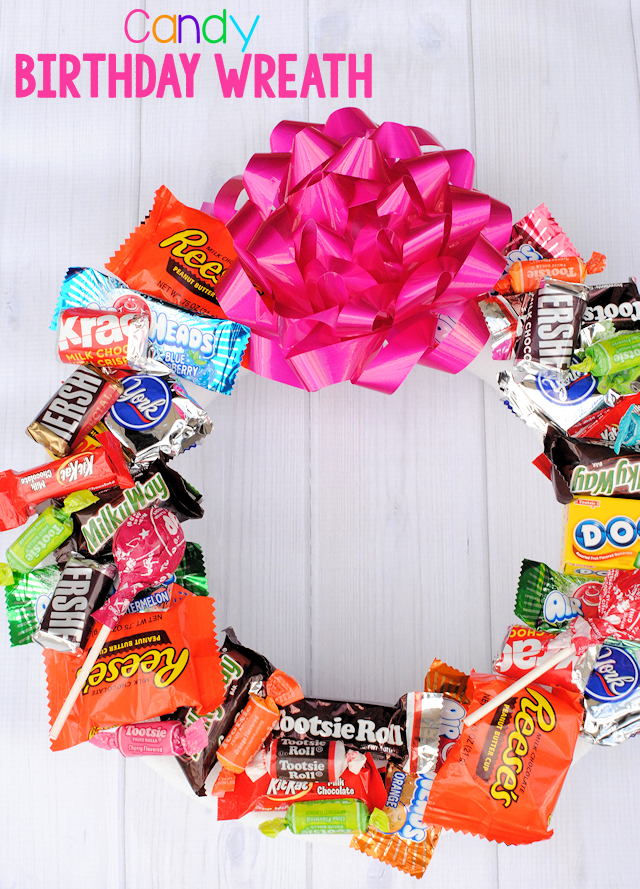
Decorate a festive wreath
Candy Wreath for Birthdays
Photo from Fun-Squared.com
Save it for the holidays and make adorable candy trains and sleighs
Image result for sleigh made from candy bars
Photo from OneHundredDollarsAMonth.com
Decorate gingerbread houses or edible trees out of ice cream cones and frosting
Image result for edible sugar cone tree
Photo from MyLifeAccordingToPinterest.com
Make friendship bracelets out of Airheads (paint with Mod Podge to make them last!)
Airheads Candy Jewlery
Photo from MomSkillsBlog.com
Hard candy can be melted into shapes to make bowls, platters, or Christmas ornaments
Photo from KidFriendlyThingsToDo.com
Make candy bouquets
Photo from ThriftyFun.com

Let Us Know

What else do you do with your leftover candy? Let us know here in the comments, on Twitter, or on our Facebook page!

Friday, August 3, 2018

4 Ideas for September's Library Card Sign-Up Month

In a few weeks is September's Library Card Sign-Up Month! This year's spokespeople are The Incredibles, and you can go to ALA's page to grab really awesome graphics to use for advertising and social media, like we used in our advertisement:


But besides posting pictures, what is your library doing this year? Not sure? Here are a few ideas shared on Facebook, retold here for your convenience:

Make a Visual To Represent New Cardholders

To celebrate new library members, you could keep track of every new one visually. One idea was to create a tree on a window and everyone can put up a leaf when they get a new card. What a cool way to show the community how many new members are joining!

Tap into Local Celebrities

Another library system took a picture of their county judge showing his library card and used it in advertisements and social media. You can do this with anyone well known in your community -- school principals, the mayor, radio station personalities, etc. -- to catch the eye of nonlibrary users to send them to your library.

Show Your Card for a Special Treat

Add some fun to the children's room! Ask children patrons to show their card for a special library treat, connected to ALA's theme. (i.e. Last year was Snoopy, so they gave out Peppermint Patties.) It was a big hit with the kids!

Random Prizes for New and *Returning* Cardholders

Everyone who signs up for a library card is put into a drawing for gift cards and event passes. You can take this a step further and reach out to patrons who haven't used the library in 3 months and invite them back! When they use their library card, they can also win prizes.

If you have any fun library card sign-up ideas, we'd love to hear them in the comments!

Friday, July 27, 2018

LEGO Builds @ Your Library


I love LEGO and the patrons at my Library do too. Our Library has offered programs for kids and teens to stop by the Library and build with our collection of LEGO bricks. They are popular, fun, and easy to run. But in 2015 our Library decided to take our LEGO programs a step further and it started with this book:

I showed it to my director, who is also a LEGO fan, as soon as our copy arrived. She said, "We should do that as a program."

Since then our Library has hosted more than a dozen LEGO Build programs where patrons can take home the completed project. I haven't heard of another Library that does it. (But if you do I'd love to talk to you!)

I'm here to share my experiences and give you advice on how you can host similar programs at your Library.


STEP ONE: Pick a Project


STEP TWO: Price Out the Bricks

  • I always price out my bricks through the LEGO website first. I consider this my "max" cost for each project. There are other websites that I'll mention that resell bricks, often less expansive than LEGO, but your required quantity may not be available.
  • You can order individual LEGO bricks from the LEGO website in two different ways and you may need to check both for a particular brick: Pick a Brick and Bricks & Pieces.
    • Pick a Brick - LEGO's most commonly requested pieces, you can order up to 999 pieces per brick.
    • Bricks & Pieces - Harder to locate pieces, you can order up to 200 pieces per brick.
  • Now do some math! Multiply the cost per brick by the number of bricks needed.

STEP THREE: Purchasing Bricks

  • My two favorite ways to buy bricks:
    • LEGO Website - Pick a Brick and/or Bricks & Pieces
    • BrickOwl - LEGO Marketplace with brick resellers. You can usually find parts cheaper and they usually ship faster than LEGO, however you may have to order from multiple sellers to get what you need and price comparison can take longer. 
  • You could also try purchasing bricks directly from a LEGO store. Wall of Bricks is a great website to check what bricks are available at your local LEGO store.

STEP FOUR: Preparing Kits

  • Since you are creating your own kits you need to sort and bag them yourself. If you have detail-oriented volunteers this can be a great task for them. I order a box of small clear plastic bags, like this, to put bricks in.
  • Once your bricks arrive in the mail, sort them. Next, create the kit by adding each of the bricks your participants will need to complete the build.
  • Having lots of space to sort and spread out is really helpful at this step.

STEP FIVE: Running the Program: Tips & Tricks

  • Our Library has found that these programs work best for patrons in grades 3 and up. We usually divide groups into grades 3-5, grades 6-12, and adult. You could also just do mixed groups with grades 3 to adult.
  • We've also found that the program works best with 10 participants per session and two staff.
  • In order to save your sanity and keep everyone together we build as a group. Each participant completes step one before moving on to the next. This way you don't have to go from helping someone on step 2 to another on step 12. We also do not allow patrons to have individual instructions and strongly discourage building ahead.  
    • Having trays on hand make in easy for patrons to see their parts and keep them from mixing with their neighbor's parts. Talk to your local supermarket meat department for some foam trays and line them with felt.
  • Have a projector with the LEGO instructions for you to go through step by step. It's sometimes easier to create your own powerpoint of the build.
  • Our programs usually vary in length depending on what we are building and how complicated it is.  
  • We also let patrons know that the build starts 5 minutes after the program start time. If they have not arrived in time they cannot join the build. It is too complicated and time consuming, as well as unfair to the other builders, to catch up late-comers. We also don't allow late-comers to take kits with them. We usually don't have printed instructions and the point of the program is to build at the Library. 

More Helpful Advice I Can Give You:

  • Build in enough time before your program date to order bricks, receive them, sort them, and possibly order missing bricks. I recommend a month or more.
  • If you order more than 2 projects at once, know that it can be a major time suck to separate bricks from different projects. 

    I'd love to hear from you if your library runs similar programs. Feel free to email me with any questions.

Friday, June 22, 2018

14 Ways Libraries Can Help Immigrant Children and Families

The news around immigration to the US is heart breaking right now. If you find yourself wanting to do something, but are not sure what, here are a few suggestions curated mostly from a post in Library Think Tank.


Collection Displays

  • Create a display related to Migration and Refugees to help inform patrons of why people are coming here.
  • Display Central American Literature.
  • Display books connected to epigenetics, showing how trauma can be passed down through subsequent generations.
  • Always display books that include POC kids. When book talking, always talk them up and get them into kids' hands to grow empathy.

Information Displays

  • Provide sanctuary locations and qualifications.
  • Display information on immigration and legal rights/citizenship/etc. Include this information in multiple languages! Print out Know Your Rights cards in multiple languages.
  • Highlight (or start) your collection on ESL Learning Materials, citizenship exam study books, and information on becoming citizens.
  • Curate useful websites for your patrons: Informed Immigrant, Immi, and more. Check out Libraries Serve Refugees for great and local resources! 

Programming

  • ‘I’m a Migrant, Ask Me Anything’ Program
  • Invite authors to speak, like Reyna Grande (The Distance Between Us) and Luis Alberto Urrea (The Devil's Highway: A True Story). Offer programs in both English and Spanish!
  • Invite an immigration lawyer or a local nonprofit immigration service to give a talk.
  • Movie screenings about immigrants like El Norte
  • Host a program where your patrons can become pen pals with an immigrant
  • Currently, there's The Comfort Campaign going on right now which is open to anyone (ends July 4th). They're asking for letters of welcome and comfort, artwork and/or a teddy bear to be sent to a nonprofit which will send it out around the US to their 27 different locations. Might make a great and easy program.

____________________

On a Personal Level, If You Want to Help Out, You Can:

Connect


Donate:


Inform Yourself


Make Phone Calls

  • DOJ Comment Line: (202)353-1555
  • Chief of Staff, John Kelly - 202-456-1414
  • Attorney General, Jeff Sessions - 202-353-1555
  • DHS Secretary, Kirstjen Nielsen - 202-282-8495
  • Acting ICE Director, Thomas Homan - 1-866-DHS-2-ICE
  • HHS Secretary, Alex Azar - 202-690-7000
  • Acting Assistant ACF Secretary, Steven Wagner - 1-877-696-6775​
  • ORR Director, Scott Lloyd -202.401.9246

Do you have any additional suggestions? Please let us know in the comments!

Friday, March 23, 2018

Delicious Library Programs

Like many people, the two great loves in my life are good books, and good food. What better way to integrate the two than to do a library cooking program? Of course, there are many ways in which to do this; I've compiled a list of ideas in which cooking can enhance your library.

Cookbook Clubs

There are a couple different ways that I've seen cookbook clubs work in libraries.
  1. By Theme: Everyone finds and prepares a recipe that follows a certain theme (for example, cheese, cookies, vegetarian, Food Network Stars etc.). Participants bring their completed dish, along with the book it came from (or a printed recipe), to a meeting, and they can eat and discuss the various cookbooks and what they liked or didn't. Pros: you may get everything from Grandma's cheesecake recipe to the new and exciting Food Network stars. Also, you don't have to find many copies of the exact same book.
  2. By Book: Everyone uses the same book (or a choice of two or three pre-chosen books by a certain author or theme), and chooses a recipe to bring. Pros: It's easier to discuss the book itself (Were the directions clear? Does the food actually look like the photos? Did you like how it was organized?) if everyone uses the same book, and you get to try a variety of different foods from the same author. Cons: It may be hard to locate several copies of the same book, and you may have to have a sign-up sheet with different recipes, so you don't end up with everyone bringing the same dish.
Whichever way you decide to go, it's probably a good idea to make sure that there is a copy of each recipe with each dish, so that people who like it may take one or copy one, and also to ensure that any allergies are accounted for.

Book Clubs with Food

Is your book club getting a little tired of chocolate chip cookies every meeting? Perhaps it's time to add some themed refreshments! This is especially fun with books that have a very definite setting, whether somewhere in the world or in time; Jane Austen-era books would be perfect with tea and cucumber sandwiches, while international books may have regional cuisines that might suit. It would be easier for the librarian to have book club members alternate on who brings the refreshments, which means that each person is only responsible for bringing treats about once a year.

I have done this with children's book clubs; while reading Rebecca Stead's When You Reach Me, we made sandwiches (the main character has a part-time job in a deli); when we read Maniac Magee by Jerry Spinelli, we had Tastykake Butterscotch Krimpets, which feature in the story. This helped the readers to connect to the story in a unique and memorable way.

Cooking Classes

Kids

Cooking classes for kids are lots of fun. Some places are equipped for actual culinary masterpieces, but for me, they were more mixing and assembling than actually cooking anything (rather than baking cookies, we would decorate them). You can choose from the myriad of cookbooks for children that are out there, or use whichever of your own recipes you like. The hardest part was letting every child be sure to add some of whatever ingredient we were using (hint: if you need 2 Tsp of something, that's 8 kids who get to add 1/4 tsp!) Some ideas that worked well for me (tried and tested!) are:

  • Whipped cream: you need a hand mixer for this one, but that's easy enough. Amaze the kids (I got a lot of "you can MAKE whipped cream?!") and then have them make ice cream sundaes.
  • Make your own ice cream sundaes.
  • Marshmallow treats - great for seasonal programs! Melt the butter and marshmallows in the microwave, stir in cornflakes and green dye for wreaths, chow mein noodles for bird nests (top with jelly bean eggs and Peeps), or Rice Krispies and rainbow sprinkles for a birthday confetti theme.
  • Decorating cookies or cupcakes - always a blast.
  • Dirt & Worms - mix chocolate pudding, cool whip, and oreos; each child gets extra crushed oreos and gummy worms to put on top.
  • Melting chocolate and dipping food into it. (Kids will eat anything covered in chocolate - sour cream & onion potato chips, cheese crackers, you name it.)

I always started with the rules: The first step is always "wash your hands," don't put your mouth on anything until we are ready to eat, parents can have some if there's any left once all the kids are served.

Teens

Cooking with teens can be more fun and involved than children's programs are. If you have access to a toaster oven and a microwave, you're in business! A hot plate would be nice, too. Teen recipes can include all the children's recipes as well as:

  • Smoothies - I brought my blender in from home for this one.
  • Nachos
  • English Muffin Pizzas
  • Decorating cookies or cupcakes (including Cupcake Wars and other programs)
  • Melting chocolate and dipping food in it
  • Pancakes (if you have a hot plate)

Adults

Adult cooking classes can, of course, be even more complicated. It all depends on the space you have available, but demonstrations are usually easy enough to set up. Everyone can eat while questions are answered, variations are discussed, or future meals are planned. Some program ideas include:

  • One pot meals
  • Slow cooker meals
  • Pasta dishes

Nutrition Classes

It may surprise you how many people could use, and may enjoy, a class on nutrition. The rules have changed quite a bit over the years, from the 4 Food Groups to the Food Pyramid to the My Plate guidelines, and when you get used to eating a certain way, it's even more complicated. (A recommended serving of pasta is HOW small?) Try to include samples of well-prepared healthy foods, because things can be much more delicious, and therefore inviting, when prepared well. (Have you had roasted broccoli? It's life-changing!)

Food Tastings

Take your taste buds on a ride with some delicious food tastings! Learn about chocolate, and try different brands and intensities (white, milk, or dark). Test different teas and see which one you like best. I went to a library program where different teas were paired with different cheeses - it was delicious!

If you're not sure where to start, perhaps locate a local store that specializes in a certain type of food, and see if they're interested in collaborating. As a coffee fan, I would be very interested if a local cafe taught me the differences between blond roast, regular, and dark roast coffee, or what actually is the difference between a latte, cappuccino, and macchiato.

You could also do blind tastings of different brands; perhaps one cheese pizza from each of 3 different restaurants could be compared, or see if patrons could tell the difference between generic and name brand items.

Have you tried it?

We would love to hear from you! You can leave a comment here on this post, on our Twitter page, or on Facebook.


Friday, February 9, 2018

Programming Librarian: Spend $$ Wisely With New Tool Fakespot!

We are really excited today to talk about a new online tool, Fakespot. If there could be a librarian for Amazon reviews, Fakespot would be it.


It is the perfect website for anyone who has to purchase an unfamiliar product. It doesn't matter if it is craft supplies for a library program or a new vacuum for the staff room- Fakespot will evaluate the reviews for free! Fakespot won't tell you which is the best - you will need to pick out your favorites first - but afterwards you can analyze their reviews through Fakespot to double check their authenticity.

It is so easy to use. Just go to Amazon and look up the product you want to buy. Let's say you want to buy a cell phone charging station for your reading area. Amazon has over 50,000 results! What charging station to choose?

On the first page, you can find three of them with 4.5 stars, all over 100 reviews. Let's see if they are comparable. Just copy Amazon's URL for the product and paste it into Fakespot's search bar:


Fakespot will give you a grade (rating the *Reviews*, not the Product), analysis overview, reviews summary, review count, and price track. And, lo and behold, they all rated differently (double click image to make it larger):


So, now your decision is easy! Best go for the middle price point and order the last one.

If you don't want to do that much research, you can use their "Find Me Similar Products" feature and they'll bring you to the ones with good reviewer grades. It is located in the exclamation point section.


Fakespot is best for products with lots of reviews (more potential to find fake reviews there than one with just a handful). They only work for Amazon (and a few other websites that are non-library related), BUT even if your library doesn't order from Amazon, it is very likely that your store's products are also on Amazon. Research first, then buy!

Of course, as we all know, automated evaluation programs aren't perfect. So, take their results with a grain of salt and use your judgment. However, they are certainly helpful with making decisions if you aren't sure... And in this day and age with so much fake hype going around, having a truth detector is very handy.

Happy shopping!

Friday, October 27, 2017

So... You Want to Be a Zombie


Today, I would like to share a fun and easy program you can do with your teens (or you can do on yourself for an easy Halloween costume!). In a previous position, I held an annual Zombie Day at the library, and it was awesome - we watched two movies, ate Jello-o brains, and did our own makeup. The first year we did a Zombie Day, I hired a makeup artist to turn us undead, but the next year, I decided we could learn to do it ourselves. I'm so glad we did! Our artist was wonderful, but that was money we could spend on other things. And, as it turned out, more teens were interested in doing their own makeup, as we had about twice as many people as we did the year before!

Kat, the Zombie Librarian!
For those who would like to host their own Zombie Day, here is a quick tutorial on how to turn yourself into a zombie. I'm using my own face and hands as a tutorial, so please forgive the zombie selfie photos.

First, the supplies:

We had white, green, and black cream makeup; fake blood; liquid latex; toilet paper (to use with the latex); and LOTS of sponges. We also had small paper plates, so each person could have their own supply of makeup, for sanitary reasons.

To apply a glamorous undead look, first mix up some makeup. Using mostly white, with dabs of green and black, make a lovely disgusting color.  I found that it looked more realistic if the makeup was somewhat mottled, so try to not mix it all the way, and give it a marbleized look.


Give yourself a nice, even coating of a pale, sickly color, anywhere you would like to apply makeup - face, hands, even knees if they stick through the holes in your jeans, whatever. Try to get at least part of your neck, or else the makeup will look just like a mask.

Yes, this is me. Don't I look excited?!

My makeup ended up a fair bit more caked-on than that, but you get the idea. Try to get your lips, too, if your makeup is safe for that (it will say so on the tube).

Next, add a bit more green and black to your makeup to make a darker color, and dab it around your eyes, to make them look sunken in. Solid colors and absolute shapes aren't necessary - no realistic zombie would have a perfect circle of black around their eyes.


You can add some dark spots to cheekbones or for bruises, as well.  Add blood (with sponges! Blood stains clothing!) to your mouth or anywhere else you feel like bleeding. I had it coming out of one ear and dripping down from my mouth. Then, mess up your hair - maybe sprinkle some talcum powder in to make it ashen.  And, voila!


Now, let's say that you want to be the type of zombie that has gaping wounds. That will require liquid latex.

The first thing you do - ALWAYS - is a test patch. Put a little bit of latex on your hand or somewhere else that's easy to wash off, and make sure that you're not itching or burning. If it dries and you are uncomfortable, DO NOT USE THE LATEX! You might be allergic! Even if you've never been allergic to latex before, it is always a good idea to test any new product to see how it makes you feel, just in case. If you can't use latex, you can follow the rest of the directions using school glue; it won't be exactly the same, but it'll be similar.

Once you've tested, it's time to get started!  First, pick where you would like the wound to be.


Even with little dabs of makeup, my hand is rather boring, wouldn't you say? Let's make one here.

Add a layer of liquid latex to your hand (or wherever), and then add some toilet paper to the top of it.  You can scrunch it up or lay it relatively flat (as I did here). Put more latex on top of the toilet paper, until the whole thing is wet, and make sure it's evenly stuck to you on all sides.

The red is fake blood.  Fake, I swear!

Let it dry. (This is the boring part.)

Paint it like you painted your face. Don't forget fingers!


Once it's dry, pick at the latex a little bit, somewhere in the middle of your hand, and pull it up to reveal the skin underneath. This will make a gaping wound, with skin peeling away. Gross.

Like this.

Dab some black paint into the wound to give it some depth.


You can drip or sponge on blood, as well.

Eeew! It's a fresh bite!

The fake blood that I had dried nicely after a few minutes, so I didn't have to worry too much about it rubbing off on anything I touched. It smeared a little bit, but the blood smears seemed to accentuate the look, so I was fine with that.

Here's how one of my teens did with her hand.  It looks so gross - I love it!

A few notes on liquid latex:

  • Always do a test patch before you apply! I know we said that, but it's worth re-stating.
  • It smells really bad. Fair warning.
  • You can use this anywhere on your body, but be careful that you don't get it into your hair. If you do get it caught in your hair, it should dissolve or loosen up with oil - baby oil, olive oil, and peanut butter all work really well, much like they do with bubble gum. It takes a little while, but this does work! (I gave myself a head wound on Halloween, and ended up using the peanut butter method on my hairline and my eyebrow. I smelled delicious.)
  • You can use things besides toilet paper for texture. Coffee grounds make excellent scabs, and crushed cereal gives you a flaky, falling-apart look. Experiment and have fun!

Happy Halloween, everyone!

Friday, September 29, 2017

8 Lessons Learned from the 2017 Eclipse

Last August, the hottest topic of discussion in the library world revolved around the 2017 Total Solar Eclipse. For many librarians, this was the first time that they held a library program connected to it and handed out special glasses to safely view the natural phenomenon. Now that we have survived this experience, it is time to take a step back and see how it went.

Mostly because, if you are in North America, another one is coming on April 8, 2024. Right in the middle of tax time, yippee! And for our international librarians, partial Solar Eclipses are coming in 2018 for South America, Antarctica, and Australia. The next total solar eclipse is coming July 2, 2019 for southern North America and South America.

So, what do we know now that we didn't know before that we can share with future librarians?


1. It Was Wildly Popular

When word got out that libraries had free solar glasses, libraries were inundated with phone calls and visits. (And, unfortunately, this was inaccurate information. Not all libraries had solar glasses.) Hundreds of people turned up at viewing parties. People were lining up HOURS early for the viewing program. It didn't matter to people if they were in an area with full coverage or partial coverage, this was a popular program all across the U.S. Many libraries were caught off guard when a surge of interest in the glasses appeared two weeks before the event. (However, it might be important to note that this year's solar eclipse was during summer vacation for most students. Many families made a special day of it and parents/care givers took off work to experience this special event together. If school was in session, I wonder how many parents would have kept their kids home.)

2. Desperation for the Glasses

It wasn't uncommon for libraries to receive over 100 phone calls in one hour asking about the glasses. Some patrons got ugly when libraries ran out or wouldn't hand out glasses earlier than the viewing event. There were bangs on windows trying to get staff attention when libraries weren't open to the public just to double check they were out. Some libraries asked for a $1 donation if they had paid for the glasses and people were willing to do that. This may have also worked as a Friends fundraiser for the libraries who can't charge or ask for donations.

3. Where did the glasses come from?

Some libraries were able to get grants for the glasses and bought their own from these reputable dealers. (Be wary about Amazon -- a few libraries were told the glasses they ordered couldn't be verified to be legitimate so their order was automatically cancelled.) Star_Net also gave out 2 million free glasses (and 4,000 educational kits) to over 7,000 libraries.

4. Might be a Great Way to Get People Back to Libraries

Some libraries required registration to participate to the viewing event and receive solar glasses. Others only handed out glasses to those with a library card. Many didn't require anything at all... So many pros and cons to each one. One county with four branches had 1,000 glasses. They only handed them out to card holders, so they issued 70 new cards, 7 reissued cards, and brought in $200 in fines. This event could have been played as a great registration drive the month up to the big day... Of course, if you only have a small amount of glasses, it may not be worth all the effort of requiring registration. Some libraries held an eclipse event/presentation a week or two early and handed out the glasses then to avoid the mad rush of people at once.


5. Sharing Worked Well

People were happy to share glasses! In fact, most people didn't stare at the eclipse the whole time, so it makes sense to stretch your glasses supply and only give out 1-2 per family (more if the family is larger), etc. And many people did share at the viewing parties, so don't feel like you need to limit attendance to how many glasses you have.

6. Lots of Waiting

While the whole event happened over a few hours, there wasn't a lot of exciting things going on. You might want to encourage your patrons to bring chairs, blankets, and picnic lunches to help pass the time. This is also a great time for patrons to make pinhole projects, use a colander, wrapping paper tube viewer, and hear a presentation on eclipses. Some libraries tried to show live streams of the event on the NASA website which worked well for some, kept buffering for others, and, for a small amount, it didn't work at all. Some have found NASA's Facebook page supported the traffic much better than their website. One library gave out moon pies and Sunny D. Another library collaborated with the local Boy Scout troop who came to the library viewing event with their telescopes with special solar filters so patrons could look directly at the sun.


7. What to do with the old glasses?

There were so many things libraries could do with the old glasses. According to NASA, the ISO 12312-2 safety standard compliant glasses last forever if they aren't scratched, punctured, or torn. So, libraries could have collected the glasses back and saved them for a future eclipse. Or, they could have donated them to the Astronomers Without Borders who would send them to another country to be reused. For the ones that were damaged, the filters can be popped out and the frames recycled. Filters can be recycled as camera film, so you can contact a local camera shop.


8. What changes would librarians make for future events?

A) The clear response across the board was buying a whole lot more solar eclipse glasses - double to 5x the amount you expect. Again, this might not be wise if your solar eclipse is held during school hours, but this could also be a great opportunity to collaborate with schools.

B) People also talked about limiting glasses to only a few per family since it was easy for everyone to share. Others planned to keep more glasses on hand for their event since many people were willing to come to the viewing event.

C) There were also suggestions of getting porta-potties, offering food, telling patrons to bring their own chairs/blankets, and planning more events during the program.

D) The media also didn't always give out the correct information, so make sure to keep them updated with how your library is participating. If you are part of a library network, it might lessen confusion if you all agree to start handing out glasses on the same day, etc.

E) There are disagreements about whether or not a library card should be required to get the solar glasses. This will have to be for each individual library to decide. Some people felt it was a success just getting new people to walk into the library but others felt that it was a missed opportunity to get people to become patrons. (Some libraries were dismayed to learn people had driven long distances to visit them and get glasses because their own library was out or never had any.) One library not only made it a requirement to have a library card, but required that they checked out at least 5 items to earn their free pair of glasses.

F) Lastly, while the weeks leading up to the event might be insane, the day of the event has been very rewarding to many librarians. Coming together as a community to learn and witness a natural phenomenon was an amazing experience.

Please note: 

Many of the specific situations cited in the post above came from Facebook Discussions here and here last August. If your library participated, what did you learn from the experience?

Friday, August 11, 2017

Program Planning: Walk-In, Registration, or 1 Hour Early Tickets?

So, you have planned this fantastic program. Maybe you are running it yourself, maybe you hired someone highly recommended... Either way, you think that it could be a hit and you are dreaming of a full house.

But what to do next? Should you require registration or just allow walk-ins? Should you hand out tickets an hour before the event? We look at all three of these options and give you the low down on the pros and cons, as well as share a fourth technique you don't hear about often. (This post was inspired from the YA-YAAC listserv, which we highly recommend to youth and teen librarians!)


Walk-In

The easiest way to handle program attendees. You advertise the event and anyone is allowed to attend. No sign-up necessary.

Pros:

  1. Patrons don't need to register ahead of time.
  2. No need to keep track of who is signing up and who is wait listed.
  3. You don't get no-shows!
  4. People who couldn't commit to the date early won't be discouraged from coming the day of.

Cons:

  1. You have no idea how many people to expect to come.
  2. Hard to plan material needs. Might have bought too much or too little, wasting funds or requiring rushed trips to the store during the program.


Registration

Many libraries require registration for their programs. Patrons need to sign-up ahead of time (either by contacting the library who has a paper sign-up form or online via a program like Eventkeeper) until space runs out. 


Pros: 

  1. You will know how many people to expect at the program. If not enough register, it is easy to make the call to cancel the program. You will also be able to spend the appropriate amount of money on supplies.
  2. You don't have to open the registration right away. Some libraries prefer to wait either two weeks before the event or the Friday before and then open registration.
  3. You can easily  keep track of the no-shows. If certain patrons keep registering but not attending, you can mentally count them out or make it a policy that three no-shows means they can't register anymore.

Cons:

  1. Some communities refuse to register but still come for the program. If you find that program attendance is higher for non-register programs, you might want to go that route.
  2. No-shows. Not everyone who signs up will actually come. A few ways you can remedy this: 
    1. Opening registration really close to the program date (2 weeks before or the Friday before) can help decrease the odds of no-shows.
    2. Or, if you see a pattern, you could register 20% over capacity, knowing that you'll never be 100% full.
    3. Another option is to require a $5 deposit when people register to dissuade anyone who isn't willing to commit from signing up. At the program, you can return their $5.
  3. What to do about late patrons? Should they be allowed in after 30 minutes? Should they lose their spot after 10 minutes? Make sure this is written in your advertisement.


The Big Question for Registration: Wait List or No Wait List?

When registration space is filled, some libraries allow patrons to sign-up onto a Wait List. When people cancel, the librarian will contact those on the list and offer them the coveted spot.


Pros: 

  1. It allows you to not have to officially turn anyone away. A spot may open up!
  2. If you see many names on the Wait List, you could make a second session and offer it to them.

Cons:

  1. It is labor intensive. If someone cancels and you call the first person on the Wait List, what do you do if they don't answer the phone? Keep calling people or leave a message? What if the cancellation is a few minutes before the event, do you make phone calls then? Is it worth your time to do that?
  2. It also complicates things when it comes to those who came to the event but did not register. They are willing to wait for openings, but should they be given the opportunity if they didn't join the Wait List?


1 Hour Early Tickets

Instead of requiring people to register, you can tell them to come to the library an hour early to get a ticket. Once tickets run out, they are out of luck.

Pros:

  1. Everyone who gets a ticket will hang around, so you will not have any no-shows.
  2. Because they have to come early, this gives them an opportunity to walk around your library, hopefully check out a few items or see how cool the Children's Area is!

Cons:

  1. It'll be a bit crazy the hour before the program as everyone comes for a ticket at the same time. This can be managed, though, with careful planning. Maybe you'll want someone at the door to hand out tickets instead of letting a line form in front of the check-out desk? 
  2. You'll have an influx of people hanging out at the library, which may not be ideal if your library doesn't have the space for people to wait. If you do have the space, maybe plan a few passive activities to keep the kids entertained?


Targeted Registration 

This is something I had done at my previous library that worked well. I used a Google Form for Summer Reading Registration, and after all of the usual questions, I listed all of the programs and asked them to mark which ones they might be interested in. Then, a week before the program, we emailed only the patrons who had shown interest to tell them that registration is now open. 

 Pros: 

  1. Find out people's interest in your programs right away. We found the responses were a good guide for how popular the program would be... And if there weren't a lot of interest in a program, it was best to cancel it.
  2. Allows you to target your advertising to only those interested so you don't become "noise" to the patrons and they start ignoring your emails.
  3. People are more likely to follow through with attending when they register close to the date.

Cons:

  1. Can be time intensive. We had weekly programs, so we had to send out specific emails every week.
  2. Harder to buy materials ahead of time since you open registration close to the program (though you could open registration two weeks early to prevent that).
  3. We had to create our own form on Google Forms since none of the big Summer Reading programs offered this option for listing programs. It was easy to make, though, and easy for us to later group emails together by interest.
  4. It may not work for Summer Reading, if you want them to use an official Summer Reading program like Wandoo Reader. (Who would sign up twice?) It worked for us because we used our homemade Scratch Tickets program.

Do you have any other suggestions on this topic? We'd love to hear them in the comments! Unfortunately, there is no one right answer. Try them all out and see what works best for your community. It might be a combination. The good news: you have options!