Friday, April 24, 2015

Management 101, Part 1

Back in October, there was a fabulous conversation on ALA Think Tank about what is Management 101. So many people participated that the comments filled up eleven pages! I enlisted my Director (thanks, Margaret!) to help me pull out the best of the best and trimmed it down to a two part series.

Today, we'll focus on the first three categories:

A Manager Should Be...

  • Be a leader, not a manager.
  • Be professional, consistent and kind.
  • Be really aware of the power differential - people respond differently to you when you are their boss than they did when you were their peer. If you really want open dialog, you have to create an environment where people feel safe expressing their thoughts.
  • Be willing to own up to your own mistakes and shortcomings.
  • Be an active listener. Don't rush to judgement.
  • Be willing to change your mind and make sure that your staff understands that it's okay to change your mind.
  • Be compassionate - to everyone.
  • Be fair and back up your staff.
  • Be optimistic, be positive - but also be alert to the possibility that you'll be inheriting a couple long-standing, under-addressed problems that you'll be responsible for fixing.
  • Be honest, transparent, and consistent. Have integrity and start with yourself. Be the example.

A Manager Should Always...

  • Always say thank you often.
  • Always share praise.
  • Always invite feedback.
  • Always keep your composure.
  • Always deal with it NOW!
  • Always praise everyone or none at all when in front of others.
  • Always check with fellow supervisors before you ask someone else's supervisee to do something.
  • Always start any new relationship with respect regardless of anything that you've heard before. A person not worthy of respect or trust will reveal that quickly enough.

A Manager Should Do...

  • Do engender a positive work environment.
  • Do proactively earn their trust - don't just expect it.
  • Do listen more, talk less.
  • Do develop a thick skin.
  • Do retain your sense of humor.
  • Do take responsibility when you could have managed better.
  • Do reflect on the best and worst managers you ever had, and then learn from it.
  • Do have a willingness to jump into the trenches and help when it’s needed.
  • Do learn your staff's learning styles and how they communicate best.
  • Do give your employees tasks that speak to their strengths and interests whenever possible.
  • Do spend more time and energy on the people with positive attitudes than the ones with negative attitudes; understand that there's not always a solution to negative situations.
  • Do use clear communication and outlined tasks.
  • Do communicate more, and in more detail, than you think you need to.
  • Do hire good people, and then get out of the way and let them do their jobs.
  • Do find a mentor.

Friday, April 17, 2015

Ready to Go Book Display: Villains

Welcome to our series, "Ready to Go!" Book Display. Once a month, we'll highlight the latest or greatest for every age group (Adults, Teens and Children) that you can promote within your library or order for your collection. 

Here's another list as we continue planning for summer reading 2015! This month I will be focusing on Villains, but be sure to check out our previous lists of Superheroes and Everyday Heroes.

Recommendations for Adults:

Collects seventy-five years of comics featuring Batman's greatest enemy, the Joker, from his original arrival in Gotham City to his most recent adventures in "Death of the Family."


Presents a complete list of super-villains in the DC Comics universe, profiling such baddies as the Joker, Doomsday, Black Manta, Lobo, Lex Luther, and Sinestro.


Exploring a number of themes that form the foundation of villainy in Hitchcock's long and acclaimed career, Hitchcock's Villains also provides a detailed look at some of the director's most noteworthy villains and examine how these characters were often central to the enjoyment of the director's best films.
Recommendations for Teens:

V is for Villain by Peter Moore (May 2014)
Brad Baron and his friends discover dangerous secrets about the superheroes running their society.


To coincide with a new documentary from Warner Home Video about the history of DC Comics villains, comes this collection of tales starring DC's most popular villains from some of the biggest names in comics.


 An introduction to more than two dozen of history's most notorious women invites readers to draw their own conclusions while sharing the stories of such figures as Tituba, Lizzie Borden and Cleopatra.

 Recommendations for Children:

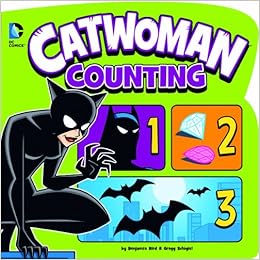
Catwoman Counting by Benjamin Bird
 In this counting board book Batman chases Catwoman through Gotham City.


Archvillain by Barry Lyga (Oct 2010)
Twelve-year-old Kyle Camden develops greater mental agility and superpowers during a plasma storm that also brings Mighty Mike, an alien, to the town of Bouring, but while each does what he thinks is best, Kyle is labeled a villain and Mike a hero. 


Minion by John David Anderson (June 2014)
 Michael Morn is a supervillain-in-training and the adoptive son of the brilliant criminal mastermind whose sense of right and wrong is thrown into question when a new superhero arrives in town.
 Presents step-by-step instructions on how to draw famous Disney villains, and includes information on tools, materials and drawing exercises.
Top 10 Worst Vicious Villains by Jim Pope (Jan 2012)
From gun-wielding gangsters to dangerous outlaws of the Wild West, meet the biggest baddies in history and discover how they tortured and terrified their way to the top in Top Ten Worst Vicious Villains. 

Swept away to a hidden academy for training budding evil geniuses, Otto, a brilliant orphan, Wing, a sensitive warrior, Laura, a shy computer specialist, and Shelby, an infamous jewel thief, plot to beat the odds and escape the prison known as H.I.V.E.
Meet the Villains of Villainville by Lucy Rosen (Sept 2010)
Enter Villainville, just across the river from Super Hero City, and meet all the biggest bad guys, from Dr. Doom to Magneto and from Doc Ock to Loki.


Want more Summer Reading recommendations? Check out our previous posts on Superheroes and Everyday Heroes!


Friday, April 10, 2015

5 Secret Tricks to Using Canva like a Pro!

Back in December, we wrote a blog post about the online program, Canva, which makes designing for social media and flyers a breeze. Back then, we explained how it works and showed screenshots of the easy website.

Today, we're going to share five secret tricks to make Canva work well for the everyday librarian.

#1. Design for Multiple Social Networks in One Image!

The biggest flaw to Canva is that you cannot easily make one design and reconfigure it for the different social networks. There are two ways to work around this:

1. Social Media Examiner wrote a post called "How to Optimize Your Images to Work Across Social Networks" where they figured out the measurements of Facebook, Twitter, and LinkedIn and how you can design one image that when uploaded to all of these networks, will still look great! Your words won't be cut off!


2. One of my coworkers taught me this other trick. When she wants to reuse a design for a different social media network, she downloads the image and re-uploads it in the next format she'd like to use. It isn't as fast as number one, but it will work for any platform!

#2. Skip Canva's Images

Canva used to list the free images first in each section, but recently, they mixed them together and there is no way to search for only the free ones. It isn't worth the hassle to manually search through them. I usually browse the templates to see what I like and then go to free image websites to quickly search for what I am looking for. I still like 123RF, though lately I've been using MorgueFile (http://morguefile.com/) and using images that do not require attribution for a cleaner look.

#3. Download a Color Picker

One great way to pull together your words and images is using a similar color scheme. Download a color picker which will tell you the exact code for the colors in your photo. I really like ColorZilla (http://www.colorzilla.com/), which is an add-on for Chrome and Firefox. It is just an icon that sits at the top of the browser. You click the icon, then  the color you want to copy on your image and it automatically saves the color code. Then in Canva, when you are changing the color, you click the "+" symbol and you can paste the code on the bottom. Ta-da - instant match!


#4. Use a Color Combination Finder

Do you have trouble knowing which colors will look great together? Use a color combination finder to quickly recognize complimentary colors! I really like Coolors (http://app.coolors.co/). You can type in your color code (which you can get from the Color Picker above) and just press the space bar to find other color combinations. When you find one that you like, you can just copy that code back into Canva.


#5. Pay Attention to the Advanced Features!

Did you know that you can blur the background or change the color tint of an image? It is easy! When you click the image and then the toolbar, you will see the option to Filter. In the Filter box, you'll see "Advanced" in small letters on the bottom left. Click on that for these great options! If you want them to disappear, just click on "Simplier" on the bottom left.


Bonus Tip!

Do you want to move fonts and images as one group? Just click outside of the image window  (in the grey area) and (while holding down the left click on your mouse), drag the mouse over all elements you wish to move. Let go of the click and then use your arrow keys to move the group.

If you have any other suggestions, please share below!

Friday, April 3, 2015

17 Ways to Accomplish Summer Reading

How do you run your summer reading program? There are so many different ways to encourage patrons to read, we decided to compile a list for you:

Game Challenges

  •    Bingo/Card Game.  Each space has a required action, which can be related to reading or to the library. When they complete 5 in a row, they win a raffle ticket or prize. If they do a cover all, they win another prize. Or, if you want to go more free form, you can make a generic card with more than five rows and allow patrons to earn prizes when they complete at least 5, 10, and 15 goals on the card (in no particular order).
  •    Game Board. For each day patrons read, they get to roll on the game board. They collect stickers, raffle tickets, and sometimes prizes as they go around the board.
  •    Themed Challenges. Give out small pieces of an activity that, when completed, will give patrons a raffle ticket. For example, one year, patrons received a letter tile for each book read. When they came up with a word, they turned in the tiles for a prize and a raffle ticket. This summer, the plan is to give out super hero puzzle pieces and patrons will get a raffle ticket when they complete the puzzle.
  •     Challenge Booklet. The booklet has 50 challenges for teens to complete with four different point values.  For every five points they earn they receive a prize entry form.  Usually each branch draws for prizes at their location and then there is a grand prize for the system. Entries can be submitted at a branch or in email and we upload it all to our Tumblr (http://hmcplteens.tumblr.com/). The booklet because it encourages creativity outside of reading and every year the teen advisory boards rewrite half of the booklet to keep it fresh and interesting for the participants.

Instant Wins!

  •     Scratch Tickets. Create your own scratch tickets where teens can win small and medium prizes instantly. If they lose, they can put that ticket into the grand prize raffle. (We explain this program in more detail here: http://www.5minlib.com/2015/03/scratch-tickets-for-win.html).
  •     Prize Wheel. Once a child has read x pages, they get to spin for a chance to win: free cookie, French fry, books, etc.
  •     Prize Machine. Every book a teen reads, they get a token to put into the prize machine. They could win small prizes like candy, erasers, etc. or they could get a piece of paper (tucked into plastic balls) that will give them chances to win the bigger prizes or a fun quote… 
  •     Tiered Prize System. Something where the first two levels are simple and easy to give out to everyone, but the next levels are limited to the first x who reach it.  For example, when people sign up, everyone will get one prize. When they read 5 books, they all get a candy bar. When they read 10 books, they win $5 to Starbucks (First 20 Teens), 20 books – free book (First 15 teens) etc… (for more details, check out http://www.teenservicesunderground.com/challenge-monday-srp-prizes/)    

Raffles/Auctions

  •    Specialty Tickets.  Earn a ticket when you visit the library, two tickets for a short book review, and three tickets for attending programs.
  •    Weekly Raffles and Contests. There are many different variations, but it could be as simple as show the librarian your book log and earn one ticket to enter the raffle. Or it could be more complex like every book, magazine, or audiobook read will earn a ticket for the weekly drawing. Losing tickets go into the grand prize raffle at the end of the summer.
  •    Prize Auction. Earn library dollars (coming for events, reading, etc.) that patrons can use in a prize auction at the end of summer. 

Community Engagement

  •    Community-Based Rewards and Experiences. Instead of winning items, patrons can get tickets to local places like the sports team and coupons for free food to their favorite hangouts. Many local businesses are happy to donate these prizes and coupons, especially when it means the winners will be bringing additional customers with them when they use the prize.
  •    Earn Money for the Library! Friends of the Library (or any other organization) promises to donate $1 to the library's materials fund for every book read.    
  •    Community Reading Goal. Ask the community to read a total of 1,000,000 minutes and keep track of everyone’s reading time on a score board. All participants will also get weekly prizes and will have a chance to pick raffle baskets.
  •   Read for Voting Privileges. When participants read for an hour, they earn a marble to vote on what kind of Final Summer Reading Party they want. 

Traditional

  •    Book Logs.  Read x pages/x books/x days for a prize/raffle ticket. It looks like most library goals are to encourage 5-10 books read in the summer or reading for 30 minutes a day.
  •    Book Reviews. Write up a short book review to earn a prize/raffle ticket.
Special thanks to the following librarians for sharing what they do at their library: Diane Giarrusso, Steven Fowler, Allison Cusher, Ebba Hierta, Lois McAuliffee, Jocelyn Baldwin, Duyane Alexander, Brianna Hanson, Laura Faunce, Julia Hendon, Alisa Burch, Carolann Macmaster, Diane M. Ranney, and Ami Segna.

Friday, March 27, 2015

13 Tips to Make Your Movie Night a Blockbuster

Do you show movies in your library? 

There was a great discussion on ALATT back in February about what has worked well at other libraries. Maybe one of these tips will work for you! (And if you are a newbie, definitely read American Libraries' article about why you need to buy a movie license first!) 

1) Show a Movie the Same Day It Comes Out

   If you can see holds on unreleased movies, you can use that to learn what movies your patrons are most interested in. I also like to check out http://www.dvdsreleasedates.com/ where, on the right, they list the most requested release dates.

2) Show Movie Award Winners and Nominees.

   If you want to have an adult crowd, nothing sparks their interest more than showing the award winners and nominees. Bonus points when you do it close to the voting announcements.

3) Show Family Movies During a Vacation Week.

   What else are parents going to do with their kids? If you are concerned about content, check out Common Sense Media beforehand. They rate all of their movies on areas of concern (nudity, language, violence, etc..).

4) No Shame in Selecting a Popular Title.

  You're tired of hearing about it? That's the perfect movie to show. (Yes, Frozen will still draw large crowds and you don't have to add any other incentive to have them come.)

5) Offer a Fun Raffle Prize

   My best teen movie night was when we raffled a 5 lb Gummy Bear. Teens I never saw before came out for this event! It was so easy and you can order it from Amazon (Yay for places how allow business accounts!).

6) Show the Previous Movie Before the Next Movie Comes to the Theater.

   Who doesn't want a refresher of the first movie before the next one comes out? Bonus points if it is a popular first movie.

7) Pair the Movie with Trivia and Games or a Craft.

   If you want them to leave the comfort of their home, perhaps they need more than a larger screen to come to the library.

8) Try a Film Series.

    Showing multiple films in a series (rather than just randomly) will allow you to build an audience that you can count on.

9) Show a Cult Classic.

    What's more fun than watching your favorite movie with other fans?

10) Show Documentaries.

    Select an interesting subject and plan a discussion afterwards. If documentaries circulate well at your library, you might want to consider this.

11) Show Movies That were Inspired from Books.

    Being a library, is there a better place to meet other readers, watch the movie, and then discuss the differences between the two?

12) Order MuVchat and Allow Your Patrons to Text Right on your Movie Screen.

   A few years ago, YALSA published an article about how this works. Patrons can use their own phones to text messages on your big screen. If they have an iPhone, they can download the app so they aren't charged texting fees. If they don't have a phone, they can use any computer with Windows. It is a completely different way to experience a movie.

13) Create an Interactive Movie.

    I've seen this done for young kids and teens. Have the audience do certain actions that happen within the movie. For example, Oskaloosa Public Library has viewers throw glitter whenever Elsa uses magic, boo when Hans is on-screen and eat carrot noses whenever Sven is around. Eldredge Public Library held a "Jaws, the Experience!" a few summers ago, where tweens and teens were given goody bags of things to do and had them yell "Ah! Shark!" whenever the fish swam on screen. If you want help planning, teens are really good at coming up with ideas.

And there you have it, some successful ideas for when you plan your movie night.

Friday, March 20, 2015

Ready to Go Book Display: Everyday Heroes

Welcome to our series, "Ready to Go!" Book Display. Once a month, we'll highlight the latest or greatest for every age group (Adults, Teens and Children) that you can promote within your library or order for your collection. 

Here's another list as we continue planning for summer reading 2015! This month I will be focusing on Everyday Heroes but check out last month for Superheroes and stay tuned for Villains in April.

Recommendations for Adults:


 Profiles the stories and causes of 50 courageous individuals who made significant differences in the lives of those they helped, in a collection of first-person narratives.

 Glenn Beck provides stories of the people who built America and the people who sought to destroy it.

Recommendations for Teens:
I Am Malala by Malala Yoisafzai (Oct 2013)
Describes the life of the young Pakistani student who advocated for women's right and education in the Taliban-controlled Swat Valley, survived an assassination attempt and became the youngest nominee for the Nobel Peace Prize. (And later won!)

Girls Who Rocked the World by Michelle Roehm McCann (Oct 2012)
This inspiring collection of stories provides 46 illustrated examples of strong, independent female role models, all of whom first impacted the world as teenagers or younger.

 Recommendations for Children:

Hero Dad by Melinda Hardin (Nov 2010)
 A child demonstrates that while Dad differs from a traditional superhero, as an American soldier he is a superhero of a different kind.

Hero Mom by Melinda Hardin (Apr 2013)
A tribute to moms who serve their country in the military reveals their contributions.

Pet Heroes by Nicole Corse (Feb 2011)
Heroes come in all shapes and sizes, especially when they are animals!

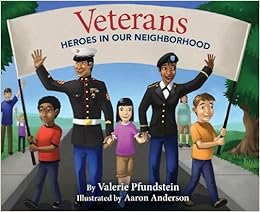
Veterans: Heroes in Our Neighborhood by Valerie Pfundstein (Apr 2013)
 A young boy has a school assignment to name every veteran he knows and it turns out that many of his neighbors have served in the military.

Heroes of the Environment by Harriett Rohmer (Aug 2009)
 This inspiring book presents the true stories of 12 people most of them teenagers, from across North America who have done great things for the environment.

Heroes for All Times by Mary Pope Osborne (Jan 2014)
Jack and Annie learn amazing facts about six history-changing individuals.
The United Nations by Katie Marsico (Aug 2014)
Around the world this agency's staff and volunteers are working to provide children with access to medical treatment and education. Find out how this work gets done.
People You Gotta Meet Before You Grow Up by Joe Rhatigan (Feb 2014)
Presents a tribute to the heroes who help keep our neighborhoods safe and provide routine services.
Recommendations for All Ages:

Unlikely Heroes: 37 Inspiring Stories from the Animal Kingdom by Jennifer Holland (Oct 2014)
Stories of acts of animal heroism, including a pod of dolphins that shielded a group of swimmers from a great white shark and a feral male cat who risked everything to protect a kitten in a tornado.


Want more Summer Reading recommendations? Check out last month's post on Superheroes!

Friday, March 13, 2015

International TableTop Day is April 11th!

Board games are on the rise! According to NBC’s Nightly News, the sale of board games is up 10% from last year, totaling 1.5 billion dollars.  Monopoly is up 15%, Operation is up more than 40% , and The Game of Life is up 45%.  This is perfect news for the programming librarian, especially those who want to participate in the International TableTop Day coming up on April 11th.

Haven’t heard this event? It is a relatively new initiative by Geek and Sundry, who produce (amongst other things) the web series TableTop with geek icon, Wil Wheaton. This will be their third year, but their numbers are already impressive. Last year over 80 countries participated, holding 3,000 events.  The beauty of this event is the simplicity - they just encourage people to sit down and play board games. They have a spiffy website at http://tabletopday.com/ and even host an event calendar that people can post their events on and players can easily see what’s available in their area. (Potential outreach to nonusers of the library!) Wil Wheaton even made a video encouraging participation: 


If that didn't get you excited to join, I don't know what will... If you would like to win an International TableTop Day Game Kit, you have until March 21st to register your event and submit a 1 minute or less video about it.

In the meantime, you can tweet about this event using the hashtag #tabletopday. If you upload your pictures on Instagram and use the hashtag #GatherYourParty, it will automatically be posted on their website at www.tabletopday.com/gallery.

To get you started, here's a list of great games you can play with a large crowd:
  • Bananagrams
  • Apples to Apples
  • Wise and Otherwise
  • Catch Phrase
  • Pictionary
  • Telestrations
  • Balderdash

Happy gaming!