Friday, May 15, 2015

Ready to Go Book Display: Road Trips

Welcome to our series, "Ready to Go!" Book Display. Once a month, we'll highlight the latest or greatest for every age group (Adults, Teens and Children) that you can promote within your library or order for your collection. 

Get ready for a summer trip on the open road , grab your keys or travel from the comfort of your living room.

Recommendations for Adults:

In it's 7th edition, Jensen includes mile-by-mile highlights celebrating major cities, obscure town, popular attractions, roadside curiosities and more.

Time Flies by Claire Cook (June 2013)
A recently separated woman faces her highway driving phobia and takes a road trip with her best friend to their high school reunion.

Food Truck Road Trip: A Cookbook by Kim Pham (Nov 2014)
Shares recipes from popular food trucks stationed across the U.S. that represent a range of cuisines.

Driftwood by Elizabeth Dutton (Nov 2014)
After the death of her rock star father leaves her with a stack of enigmatic letters, Clem embarks on a California-wide road trip to discover the truth about her father and the meaning of family.

Whether you travel these routes by car or through the pages of the book - countless wonders await you.

A Long Island psychiatrist describes her year-long odyssey around the country in a converted bus with her wilderness-loving husband.
Recommendations for Teens:

Kissing in America by Margo Rabb (May 2015)
Sixteen-year-old Eva and her best friend, Annie, concoct a plan to travel to the West Coast to see Eva's romantic hero again. As they road trip across America, Eva and Annie confront the complex truth about love.

Perfect Escape by Jennifer Brown (July 2012)
Seventeen-year-old Kendra, living in the shadow of her brother's obsessive-compulsive disorder, takes a life-changing road trip with him.


Damaged by Amy Reed (Oct 2014)
Numb after the death of her best friend, Camille, Kinsey starts to shut down but Hunter, Camille's mysterious boyfriend, has other ideas and whisks Kinsey off on a multi-state road trip to forget the ghosts of their pasts and their own fears.

Amy & Roger's Epic Detour by Morgan Matson (May 2010)
After the death of her father, Amy, a high school student, and Roger, a college freshman, set out on a carefully planned road trip from California to Connecticut, but wind up taking many detours, forcing Amy to face her worst fears and come to terms with her grief and guilt.


An Abundance of Katherines by John Green (Sept 2006)
Having been recently dumped for the nineteenth time by a girl named Katherine, recent high school graduate and former child prodigy Colin sets off on a road trip with his best friend to try to find some new direction in life while also trying to create a mathematical formula to explain his relationships.

Going Bovine by Libba Bray (Sept 2009)
In an attempt to find a cure after being diagnosed with Creutzfeldt-Jakob's (aka mad cow) disease, Cameron Smith, a disaffected sixteen-year-old boy, sets off on a road trip with a death-obsessed video gaming dwarf he meets in the hospital.

 Recommendations for Children:
Road Trip by Jim Paulsen (Jan 2013)
A father and son embark on a road trip to a distant animal shelter to save a homeless border collie puppy.
Embarking on a summertime road trip with Papa Dad and Daddy after surviving the ups and downs of their first year in junior high, Julie and Lydia use their Powers of Observation to catalog the traditions and oddities of each new location they visit before confronting uncomfortable truths about sensitive family dynamics.
Drive Me Crazy by Terra Elan McVoy (April 2015)
When Lana's and Cassie's grandparents marry each other, the girls find themselves stuck together on a crazy summer road trip that will change the course of their friendship and their lives.
Diary of a Wimpy Kid: The Long Haul by Jeff Kinney (Nov 2014)
The Heffley family road trip starts off full of promise, then takes several wrong turns - with everything from a fender bender to crazed seagulls - but even the worst road trip can turn into an adventure.
Ten-year-old Amelia keeps a journal of the summer car trip she takes with her mother and sister to Grand Canyon, Death Valley, and their California home town to visit Amelia's best friend.
Clara and Clem Take a Ride by Ethan Long (Oct 2012)
When Clara and Clem build a car out of blocks, they have no idea where it will take them. But with a little imagination, the two take the trip of a lifetime down winding roads, up tall mountains, and across the sky.
Recommendations for All Ages:

In this entertaining follow-up to Find Momo, the canine Instagram superstar travels across America, visiting iconic landmarks and unique off-the map marvels where he hides in a vast array of fun locales.

Friday, May 8, 2015

50+ Ideas for Summer Reading Swag That Will Make Your Patrons Dance

It's almost time for Summer Reading! If you're like me, you've had the programs and projects booked and planned for months (who can wait?), but you're just now thinking about prizes. Of course, there are as many ways to award prizes as there are prizes to choose from. Do you do raffle prizes, weekly picks from the Treasure Chest, or a combination of both? Here are some favorite items that have been given out in libraries around the country.


Trinkets

I'm not talking about the Children's Room Treasure Chest (that's later); these toys are more popular with teens or adults. Any of these items can be personalized with your library name or logo, and given out as weekly incentives or door prizes at programs.
  • Books of sticky notes; some nicer ones, like these, have a notepad, sticky notes, and sticky flags in a plastic cover.
  • Note pads - always useful, especially if they come with a pen
  • Flash drives (perhaps in bracelet form, though those are a bit more expensive)
  • Screen cleaners that stick to the back of your device (genius!)
  • Flashlight keychains
  • Travel mugs
  • Tumblers or other drinking glasses
  • Water bottles - many options available! I used to prefer the aluminum ones to the plastic ones, but lately I'm a bigger fan of these neat collapsible types that take up almost no room at all.
  • Tote bags. Never under-estimate the appeal of a good-quality reusable tote bag. I personally can't resist them, and neither can most teens and adults. And you can always go with the theme.
  • Laptop bags or tablet cases
  • Can koozies
  • Headphones or ear buds
  • Lip balm. One library reports having great success with this, to the point that people would come in asking for the lip balm and ultimately end up getting a library card.
  • Stress balls, especially in unique shapes
  • Electronics chargers, like this multi-charger or this portable Power Bank
  • These amazing book-themed buttons, sold on Etsy


Treasure Chest Loot

But speaking of the kids, the Treasure Chest is great for the kids who want a prize now. In my library, kids can earn either a Treasure or a raffle ticket to use for a chance at a larger prize. These treasures include:
  • Finger puppets
  • Super bouncy balls
  • Small plastic toys or characters
  • Keychains
  • Plastic sunglasses
  • Bubbles (especially the ones that smell like ice cream)
  • Stickers or temporary tattoos
  • PEZ dispensers are a big hit, and come in both DC and Marvel
  • Art supplies, like crayons or colored pencils
When you want something a bit more substantial as a prize, maybe as a raffle prize, you might want to go a bit bigger. (In some cases, a lot bigger.) You can put together a Bag O' Swag, filled with any of the above items, or you can get something different entirely. There are a few different genres of prizes to choose from.


Unique Items

For the "where did you get that?!" factor, try something a little bit different.
  • Giant candy, like this 5 lb. gummy bear
  • Or this 1 lb. York Peppermint Patty
  • Or this huge Snickers bar
  • Or this gigantic Box of Nerds
  • One library we spoke with makes their own 3D printed awards - how cool is that?!
  • These Water Dancing Speakers are a big hit with teens
  • The Create Your Own Superhero Kit is perfect for this year's theme
  • Board or card games, like Superfight!, the superhero card game
  • Posters, like this awesome one, featuring minimalist superheroes
  • Again going with the theme, try action figures, like the ones by FunKo - good for all ages!
  • LEGO sets are always popular, and come in countless designs
  • For the kids, try something to get them outdoors, like this Plasma Car
  • Groups of smaller things work well, too. Try a stuffed Curious George and a couple board books for the smallest library patrons, or some coloring books and Super Heroic Crayons. For some reason, getting a bag of prizes - even if it's all little things - makes it seem more special.
  • Signed books
  • Cosplay items, such as this Link hat from the Legend of Zelda (bonus points if you get the shield, too!)
  • Jewelry from popular manga or anime series
  • Anything to do with Minecraft will have a following, like this foam pick-axe


Gift Cards

Money is always good! Local businesses will often donate gift certificate for a prize or two if you ask them nicely. We have gotten coupons for free ice cream cones, free rounds of Mini-Golf, etc. Last year, Chipotle gave us coupons for free burritos! Or you can always go with:
  • Amazon.com
  • iTunes
  • Toys R Us
  • Simon Malls (or your local mall)
  • Comic book or music stores, like Newbury Comics


Gadgets

Because everyone wants the latest toys. 
  • Kindle Fire or other e-reader (why the Fire? Because it's also a tablet, so it's an e-reader, but it's also so much more!)
  • Samsung Galaxy or iPad
  • One library is raffling off an Apple Watch! That's one way to get noticed.


Experiences

Things are nice, but it's nicer sometimes to have an experience than an item. Whether it's a trip somewhere or a party at your library, these prizes make memories that will last far longer than plastic finger puppets ever will.
  • Tickets to movies, aquariums, museums
  • Tickets to amusement parks, like Six Flags or Cedar Point
  • Games at local arcades, mini-golf courses or bowling alleys
  • A pizza party at the library
  • An all-night lock-in at the library
  • Moving to #1 on the hold list for a book or movie of their choice

Thanks to ALATT, Programming Librarians and Teen Librarians Facebook Groups for your insight and experiences!

What prizes can your library patrons win? Tell us in the comments!

Friday, May 1, 2015

Management 101, Part 2

Last week, we shared the first half of the Management 101 list that we compiled from librarians all over the world on the ALATT Facebook Group. Today, we're going to talk about the harder parts of management.

A Manager Should Not...

  • Don't micromanage.
  • Don’t take any of their BS personally.
  • Don't assign your staff to do anything you wouldn't do yourself.
  • Don't be passive aggressive. 
  • Don't call people out in front of others. Always take the time to pull the person aside to talk about any problems. 
  • Don't feel you need to answer requests or communication immediately; take the time to think about it before you answer.
  • Don’t befriend anyone on your staff, ever. You are never, ever off duty. 
  • Don’t bring your ego to work. The folks you manage are the experts at their roles; don't micromanage their work. Facilitate it.
  • Don’t put anything surprising on a person's annual review.

A Manager Should Know Sometimes...

  • Sometimes, you will just be the bad guy and you have to suck it up.
  • Sometimes, you just need to listen and not necessarily take action.
  • Sometimes, you don't know the answer. It is okay to not know everything!
  • Sometimes, your staff is talking and whispering about you. It comes with the position. Sometimes it is good, though.

A Manager Should Remember...

  • Remember you have an obligation to the people you work with and to the mission of your institution. Look at both when making decisions and do your best to balance them.
  • Remember that it is not your job to make them like you but to respect you as a professional and as their supervisor; however, that respect works both ways.
  • Remember people will be people. Managing people will likely be the hardest part of your job.
  • Remember the focus of your work is no longer direct service provision but the *people* who provide the direct service. Support them, guide them, include them and good service will follow.
  • Remember almost no one shows up to work each day intending to screw up. If they do, there was usually a reason. Assume good intent and follow up from there.
  • Remember when you become a manager, it's no longer about you. Take your place at the end of the line - it's the mission and your people first.
  • Remember you can change behavior but you can't change personalities. 
  • Remember clear communication is the key to happy living.
  • Remember constructive criticism is a gift, done out of love for their institution and a desire for it to be the best it can be. Don't just dismiss those concerns, even if you can't actually do anything about their suggestions.
  • Remember you can admit to being human.
  • Remember to listen, really listen, when people talk to you and make sure you hear all of what they are saying.
  • Remember, always remember, you don't manage people, you manage things. You work with people.

Don't forget to check out our Management 101, part one post, for the "What to Be" and "What to Do" list.


Friday, April 24, 2015

Management 101, Part 1

Back in October, there was a fabulous conversation on ALA Think Tank about what is Management 101. So many people participated that the comments filled up eleven pages! I enlisted my Director (thanks, Margaret!) to help me pull out the best of the best and trimmed it down to a two part series.

Today, we'll focus on the first three categories:

A Manager Should Be...

  • Be a leader, not a manager.
  • Be professional, consistent and kind.
  • Be really aware of the power differential - people respond differently to you when you are their boss than they did when you were their peer. If you really want open dialog, you have to create an environment where people feel safe expressing their thoughts.
  • Be willing to own up to your own mistakes and shortcomings.
  • Be an active listener. Don't rush to judgement.
  • Be willing to change your mind and make sure that your staff understands that it's okay to change your mind.
  • Be compassionate - to everyone.
  • Be fair and back up your staff.
  • Be optimistic, be positive - but also be alert to the possibility that you'll be inheriting a couple long-standing, under-addressed problems that you'll be responsible for fixing.
  • Be honest, transparent, and consistent. Have integrity and start with yourself. Be the example.

A Manager Should Always...

  • Always say thank you often.
  • Always share praise.
  • Always invite feedback.
  • Always keep your composure.
  • Always deal with it NOW!
  • Always praise everyone or none at all when in front of others.
  • Always check with fellow supervisors before you ask someone else's supervisee to do something.
  • Always start any new relationship with respect regardless of anything that you've heard before. A person not worthy of respect or trust will reveal that quickly enough.

A Manager Should Do...

  • Do engender a positive work environment.
  • Do proactively earn their trust - don't just expect it.
  • Do listen more, talk less.
  • Do develop a thick skin.
  • Do retain your sense of humor.
  • Do take responsibility when you could have managed better.
  • Do reflect on the best and worst managers you ever had, and then learn from it.
  • Do have a willingness to jump into the trenches and help when it’s needed.
  • Do learn your staff's learning styles and how they communicate best.
  • Do give your employees tasks that speak to their strengths and interests whenever possible.
  • Do spend more time and energy on the people with positive attitudes than the ones with negative attitudes; understand that there's not always a solution to negative situations.
  • Do use clear communication and outlined tasks.
  • Do communicate more, and in more detail, than you think you need to.
  • Do hire good people, and then get out of the way and let them do their jobs.
  • Do find a mentor.

Friday, April 17, 2015

Ready to Go Book Display: Villains

Welcome to our series, "Ready to Go!" Book Display. Once a month, we'll highlight the latest or greatest for every age group (Adults, Teens and Children) that you can promote within your library or order for your collection. 

Here's another list as we continue planning for summer reading 2015! This month I will be focusing on Villains, but be sure to check out our previous lists of Superheroes and Everyday Heroes.

Recommendations for Adults:

Collects seventy-five years of comics featuring Batman's greatest enemy, the Joker, from his original arrival in Gotham City to his most recent adventures in "Death of the Family."


Presents a complete list of super-villains in the DC Comics universe, profiling such baddies as the Joker, Doomsday, Black Manta, Lobo, Lex Luther, and Sinestro.


Exploring a number of themes that form the foundation of villainy in Hitchcock's long and acclaimed career, Hitchcock's Villains also provides a detailed look at some of the director's most noteworthy villains and examine how these characters were often central to the enjoyment of the director's best films.
Recommendations for Teens:

V is for Villain by Peter Moore (May 2014)
Brad Baron and his friends discover dangerous secrets about the superheroes running their society.


To coincide with a new documentary from Warner Home Video about the history of DC Comics villains, comes this collection of tales starring DC's most popular villains from some of the biggest names in comics.


 An introduction to more than two dozen of history's most notorious women invites readers to draw their own conclusions while sharing the stories of such figures as Tituba, Lizzie Borden and Cleopatra.

 Recommendations for Children:

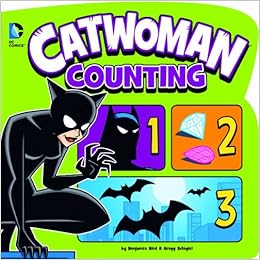
Catwoman Counting by Benjamin Bird
 In this counting board book Batman chases Catwoman through Gotham City.


Archvillain by Barry Lyga (Oct 2010)
Twelve-year-old Kyle Camden develops greater mental agility and superpowers during a plasma storm that also brings Mighty Mike, an alien, to the town of Bouring, but while each does what he thinks is best, Kyle is labeled a villain and Mike a hero. 


Minion by John David Anderson (June 2014)
 Michael Morn is a supervillain-in-training and the adoptive son of the brilliant criminal mastermind whose sense of right and wrong is thrown into question when a new superhero arrives in town.
 Presents step-by-step instructions on how to draw famous Disney villains, and includes information on tools, materials and drawing exercises.
Top 10 Worst Vicious Villains by Jim Pope (Jan 2012)
From gun-wielding gangsters to dangerous outlaws of the Wild West, meet the biggest baddies in history and discover how they tortured and terrified their way to the top in Top Ten Worst Vicious Villains. 

Swept away to a hidden academy for training budding evil geniuses, Otto, a brilliant orphan, Wing, a sensitive warrior, Laura, a shy computer specialist, and Shelby, an infamous jewel thief, plot to beat the odds and escape the prison known as H.I.V.E.
Meet the Villains of Villainville by Lucy Rosen (Sept 2010)
Enter Villainville, just across the river from Super Hero City, and meet all the biggest bad guys, from Dr. Doom to Magneto and from Doc Ock to Loki.


Want more Summer Reading recommendations? Check out our previous posts on Superheroes and Everyday Heroes!


Friday, April 10, 2015

5 Secret Tricks to Using Canva like a Pro!

Back in December, we wrote a blog post about the online program, Canva, which makes designing for social media and flyers a breeze. Back then, we explained how it works and showed screenshots of the easy website.

Today, we're going to share five secret tricks to make Canva work well for the everyday librarian.

#1. Design for Multiple Social Networks in One Image!

The biggest flaw to Canva is that you cannot easily make one design and reconfigure it for the different social networks. There are two ways to work around this:

1. Social Media Examiner wrote a post called "How to Optimize Your Images to Work Across Social Networks" where they figured out the measurements of Facebook, Twitter, and LinkedIn and how you can design one image that when uploaded to all of these networks, will still look great! Your words won't be cut off!


2. One of my coworkers taught me this other trick. When she wants to reuse a design for a different social media network, she downloads the image and re-uploads it in the next format she'd like to use. It isn't as fast as number one, but it will work for any platform!

#2. Skip Canva's Images

Canva used to list the free images first in each section, but recently, they mixed them together and there is no way to search for only the free ones. It isn't worth the hassle to manually search through them. I usually browse the templates to see what I like and then go to free image websites to quickly search for what I am looking for. I still like 123RF, though lately I've been using MorgueFile (http://morguefile.com/) and using images that do not require attribution for a cleaner look.

#3. Download a Color Picker

One great way to pull together your words and images is using a similar color scheme. Download a color picker which will tell you the exact code for the colors in your photo. I really like ColorZilla (http://www.colorzilla.com/), which is an add-on for Chrome and Firefox. It is just an icon that sits at the top of the browser. You click the icon, then  the color you want to copy on your image and it automatically saves the color code. Then in Canva, when you are changing the color, you click the "+" symbol and you can paste the code on the bottom. Ta-da - instant match!


#4. Use a Color Combination Finder

Do you have trouble knowing which colors will look great together? Use a color combination finder to quickly recognize complimentary colors! I really like Coolors (http://app.coolors.co/). You can type in your color code (which you can get from the Color Picker above) and just press the space bar to find other color combinations. When you find one that you like, you can just copy that code back into Canva.


#5. Pay Attention to the Advanced Features!

Did you know that you can blur the background or change the color tint of an image? It is easy! When you click the image and then the toolbar, you will see the option to Filter. In the Filter box, you'll see "Advanced" in small letters on the bottom left. Click on that for these great options! If you want them to disappear, just click on "Simplier" on the bottom left.


Bonus Tip!

Do you want to move fonts and images as one group? Just click outside of the image window  (in the grey area) and (while holding down the left click on your mouse), drag the mouse over all elements you wish to move. Let go of the click and then use your arrow keys to move the group.

If you have any other suggestions, please share below!

Friday, April 3, 2015

17 Ways to Accomplish Summer Reading

How do you run your summer reading program? There are so many different ways to encourage patrons to read, we decided to compile a list for you:

Game Challenges

  •    Bingo/Card Game.  Each space has a required action, which can be related to reading or to the library. When they complete 5 in a row, they win a raffle ticket or prize. If they do a cover all, they win another prize. Or, if you want to go more free form, you can make a generic card with more than five rows and allow patrons to earn prizes when they complete at least 5, 10, and 15 goals on the card (in no particular order).
  •    Game Board. For each day patrons read, they get to roll on the game board. They collect stickers, raffle tickets, and sometimes prizes as they go around the board.
  •    Themed Challenges. Give out small pieces of an activity that, when completed, will give patrons a raffle ticket. For example, one year, patrons received a letter tile for each book read. When they came up with a word, they turned in the tiles for a prize and a raffle ticket. This summer, the plan is to give out super hero puzzle pieces and patrons will get a raffle ticket when they complete the puzzle.
  •     Challenge Booklet. The booklet has 50 challenges for teens to complete with four different point values.  For every five points they earn they receive a prize entry form.  Usually each branch draws for prizes at their location and then there is a grand prize for the system. Entries can be submitted at a branch or in email and we upload it all to our Tumblr (http://hmcplteens.tumblr.com/). The booklet because it encourages creativity outside of reading and every year the teen advisory boards rewrite half of the booklet to keep it fresh and interesting for the participants.

Instant Wins!

  •     Scratch Tickets. Create your own scratch tickets where teens can win small and medium prizes instantly. If they lose, they can put that ticket into the grand prize raffle. (We explain this program in more detail here: http://www.5minlib.com/2015/03/scratch-tickets-for-win.html).
  •     Prize Wheel. Once a child has read x pages, they get to spin for a chance to win: free cookie, French fry, books, etc.
  •     Prize Machine. Every book a teen reads, they get a token to put into the prize machine. They could win small prizes like candy, erasers, etc. or they could get a piece of paper (tucked into plastic balls) that will give them chances to win the bigger prizes or a fun quote… 
  •     Tiered Prize System. Something where the first two levels are simple and easy to give out to everyone, but the next levels are limited to the first x who reach it.  For example, when people sign up, everyone will get one prize. When they read 5 books, they all get a candy bar. When they read 10 books, they win $5 to Starbucks (First 20 Teens), 20 books – free book (First 15 teens) etc… (for more details, check out http://www.teenservicesunderground.com/challenge-monday-srp-prizes/)    

Raffles/Auctions

  •    Specialty Tickets.  Earn a ticket when you visit the library, two tickets for a short book review, and three tickets for attending programs.
  •    Weekly Raffles and Contests. There are many different variations, but it could be as simple as show the librarian your book log and earn one ticket to enter the raffle. Or it could be more complex like every book, magazine, or audiobook read will earn a ticket for the weekly drawing. Losing tickets go into the grand prize raffle at the end of the summer.
  •    Prize Auction. Earn library dollars (coming for events, reading, etc.) that patrons can use in a prize auction at the end of summer. 

Community Engagement

  •    Community-Based Rewards and Experiences. Instead of winning items, patrons can get tickets to local places like the sports team and coupons for free food to their favorite hangouts. Many local businesses are happy to donate these prizes and coupons, especially when it means the winners will be bringing additional customers with them when they use the prize.
  •    Earn Money for the Library! Friends of the Library (or any other organization) promises to donate $1 to the library's materials fund for every book read.    
  •    Community Reading Goal. Ask the community to read a total of 1,000,000 minutes and keep track of everyone’s reading time on a score board. All participants will also get weekly prizes and will have a chance to pick raffle baskets.
  •   Read for Voting Privileges. When participants read for an hour, they earn a marble to vote on what kind of Final Summer Reading Party they want. 

Traditional

  •    Book Logs.  Read x pages/x books/x days for a prize/raffle ticket. It looks like most library goals are to encourage 5-10 books read in the summer or reading for 30 minutes a day.
  •    Book Reviews. Write up a short book review to earn a prize/raffle ticket.
Special thanks to the following librarians for sharing what they do at their library: Diane Giarrusso, Steven Fowler, Allison Cusher, Ebba Hierta, Lois McAuliffee, Jocelyn Baldwin, Duyane Alexander, Brianna Hanson, Laura Faunce, Julia Hendon, Alisa Burch, Carolann Macmaster, Diane M. Ranney, and Ami Segna.