Friday, July 15, 2016

Ready to Go Book Display: Pokémon

Welcome to our series, "Ready to Go!" Book Display. Once a month, we'll highlight the latest or greatest for every age group (Adults, Teens and Children) that you can promote within your library or order for your collection. This month we are celebrating Pokémon Go! Don't forget to include your Pokémon games in your display!

Pokémon Black and White (2011-2015)
20 Volumes
Black, an eager young Pokémon trainer, sets off on a journey to explore the Unova region, where he meets White, a Pokémon trainer who runs a talent agency for performing Pokémon.

Hareta, raised in the wild by Pokémon, decides to become a Pokémon trainer. Along with his first Pokémon Piplip and his new friend Mitsumi, he sets off in search of the legendary Pokémon Dialga, but Team Galactic is hunting for Dialga too.
Pokémon: Diamond and Pearl Adventure Platinum (2014)
11 Volumes
Pokémon trainers Pearl and Diamond have a lifelong dream to star in a Pokémon comedy act, but somehow end up as bodyguards to a pampered rich girl on a quest to reach the peak of Mount Coronet.


Pokémon XY (Dec 2014-ongoing)
As the new champion of the Pokemon Battle Junior Tournament in the Kalos region, X is hailed as a child prodigy. But when the media attention proves to be too much for him, he holes up in his room to hide from everyone - including his best friends.


Shares facts on over seven hundred Pokémon and includes information on the new Kalos characters and the Mega Evolved Pokémon.
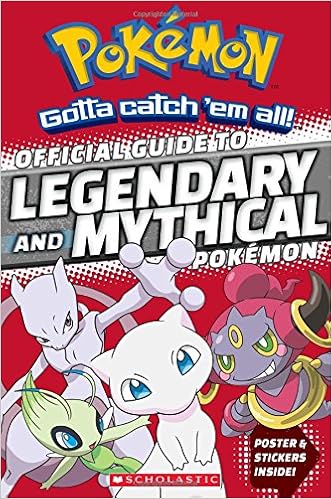


Official Guide to Legendary and Mythical Pokémon by Simcha Whitehill (Aug 2016)
Discover facts and stats about over 50 of the most amazing, intriguing Legendary and Mythical Pokémon, from Arceus to Zygarde.


How to Draw Pokémon by Tracey West (June 2003)
Get ready to draw the coolest, most action-packed Pokémon art ever. Catch step-by-step secret tips on drawing your favorite Pokémon.


Pokémon Origami (June 2015)
Offers instructions on creating ten Pokémon using origami, including Pikachu, Bulbasaur, and Snivy.

A completely updated coverage of key characters, battles, and locations, including the Unova region.


Bonus:

For those of you who are interested in Pokémon programming and advertising, there's a new Facebook Group for librarians you'll want to join: https://www.facebook.com/groups/pokelibrary/

Friday, July 8, 2016

8 Simple Photography Tricks Every Librarian Should Know


Let's talk about library photography. If you are lucky, newspaper reporters will come in and cover your programs. But even if they do, it is still important to take your own pictures of your events for the library website and social media, at the very least. However, photography is something that they don't teach you in grad school, so we're left to our own devices. Over the years, I've learned a few tricks that have upped my photography game. Maybe you'll find these helpful, too.


#1. Camera type does matter!

I couldn't believe how much of a difference it made when we bought a DSLR camera, the Canon EOS Rebel (thanks to the our teens voting for a Photography Makerspace). Sure, you might get some great shots with a regular camera or on your phone, but even leaving the DSLR camera on auto, it automatically blurs the background. Overnight, I became a better photographer! It is worth the money to upgrade.

#2. Focus on patrons, not your performer.

A photographer expert gave me this great tip that I never even realized -- if you focus on the performer, you are giving that performer free publicity. But if you focus on the faces of your patrons enjoying a performance, you are giving your library good publicity. Just make sure you get their permission before you post the photos online.

#3. Take pictures behind your performer.

So, to help you get a good spot for focusing on your patrons' faces, you should plan ahead. Ask the performer to move a few feet out into the audience and then station yourself behind them. If your patrons are sitting on the floor, lie down on your stomach so you'll get a good angle.


#4. Natural light makes the best pictures.

I learned this trick when I was taking shots of my newborn. Nothing looks better than bathed in natural light. Use this to your advantage -- focus on the people who have the best natural light on them. If you are in a room that has no or little natural light, turn on as many lights as you possibly can ahead of time to increase the quality of your pictures. (Especially since you'll want to turn off the flash if you are taking photos during a performance.)

#5. Focus on the eyes.

Even if you don't have a DSLR camera, many cameras these days have a function where you can pick a focus. When you're trying to get a great shot of a specific patron, make sure you're focused on the eyes. When the eyes aren't sharp, the picture won't look right.

#6. Be creative!

The subjects of your photos don't always have to be centered in the frame, or looking at the camera. Frame the shot with a bookshelf, to remind the viewer that the event was in a library. Get behind a viewer at a program, so you're looking over their shoulder to see what they see. Or, if you want to avoid faces, focus your shots on the finished products.

#7. Add the photography release to your registration.

There is a big debate about whether or not a library needs to have a photography release form. If you decide to do this, make it easy for yourself and patrons and include it right into your registration. If it is paper sign-up, you can hand them the release immediately afterwards. If it is online registration, even better! In my previous job, I worked with Eventkeeper to format a section to our online template form that was the Photography Release statement and asked them to mark "yes" or "no" if they accept these terms. I used this registration template for ever major event, but technically patrons only need to sign the form once and it covers their lifetime. But however you do it, it is good to have the majority of the releases done so you only need to worry about walk-ins at your event. (It also makes your newspaper reporters very happy to have this done ahead of time.)

#8. Create a Photographer Volunteer Role.

Lastly, if you are trying to run a program, it is really hard to also find time to take pictures. To solve this problem in my previous library, I created a volunteer role for in-house photographers. We opened it up to teens and trained them for a few days, then they could select which of the upcoming programs they wanted to cover. It worked out well for us and the teens really enjoyed it and took impressive shots. I made sure they downloaded their pictures on my computer before they left and then I used them for our social media, making sure to give the teen photo credit. It was a win/win partnership for us!

Do you have any photography tips? We'd love to hear about them in the comments.

Friday, July 1, 2016

Hijack Amazon, B&N, and Goodreads: Install the free Library Extension


Wouldn't it be awesome to easily see which of your "Want to Read" Goodreads books are currently available at your library? Or, perhaps, you're searching on Amazon for that title that you keep hearing about, and, after reading all of the reviews, you want to instantly find out if your library has a copy?

Well, now you can!

One of my favorite Chrome extensions is the "Library Extension" by Andrew Abrahamowicz. It is free and available to all libraries! If your library isn't on the list (there are over 1200 on it at the moment), you can request it via his website and he'll add it within a few days!

What We love:


1. The extension connects your library's catalog to sites like Amazon, Barnes & Noble and Goodreads. 


So, when you are viewing a book or ebook, you can easily see if it is also available at your library. For Amazon and Barnes & Noble, the extension appears on the right. In Goodreads, it appears in the middle, under the editions.

Amazon Screenshot

Goodreads Screenshot

2. It is so convenient to use! 

You just click the "borrow" button and it brings you to your library's catalog, directly to the book you wanted.

3. It allows you to harness the great browsing and searching power of Amazon and Goodreads, but easily see availability from your library's catalog. 

I've also used it to make sure my collection has the top rated books, quickly finding what I was missing and then ordering. It can also be helpful when developing Reader's Advisory lists.

4. You can connect to as many libraries and consortiums as you want. 

Just remember to go back to your extension after you install it to click on "tools" and then you can select what libraries you want to see. Or just go to this handy link after installation: chrome-extension://chkgcmmjoejpekoegkedcpifgfhpjmec/config.html


5. Fabulous customer service. 

They quickly add new libraries when requested (usually within 24 hours) and fix any bugs that you come across (from books being linked incorrectly to books not showing up when they are indeed available). This is impressive work from a free extension! They do want to know of any problems, so please let them know.


How Does It Work?

This extension connects your library's catalog to these sites. They use the title and author for matches between the two catalogs, so sometimes (since we all know how great our library catalog works), it may not work properly. But in my experience, the bugs have been few and far between.

They do search for ebooks, too, but they are currently only able to do that for OverDrive, so if you don't have an option for ebooks for your library, that's probably the reason why.

For those of you concerned about privacy, they DO NOT track your browsing history.


Future Updates

This extension only works for Chrome right now, but they are working on a  Firefox extension. You can sign-up to be notified of when it is available.

Unfortunately, they do not include audio books, CDs, or video games. They do plan to offer a premium version in the future, and I hope they include this option in that package. Currently, they do not make any revenue off of this extension (which makes their fabulous customer service all that more impressive!).


Check it Out!

We cannot convey how much we love this extension and what Abrahamowicz has created -- and for free! One of the hardest jobs for libraries to do is be part of patrons' every day lives. This extension allows us to be integrated onto the sites that our patrons are visiting more than our own catalog. So valuable for everyone in many ways.

Definitely worth five minutes checking it out and seeing how it works. It might even be worth an extra minute telling other librarians and patrons.

Friday, June 24, 2016

The First Global eBook Club for Libraries (on OverDrive)

Facebook Image Provided by OverDrive's Marketing Kit
Have you ever wanted to try an eBook Club with your patrons? If your library uses OverDrive, now is your chance to try it out!

From now until July 7th, patrons can borrow the eBook A Murder In Time by Julie McElwain and participate in the fun. Here's why every library with OverDrive should get on board:

1. This title was selected in a survey of over 20,000 OverDrive readers! Even if only 10% of these people participate, it'll be a vibrant community.

2. Since you're partnering with OverDrive and the publisher Pegasus Books, there will be no waitlist -- everyone will get to immediately download the book. (YAY!) Unfortunately, there is no audiobook version of this book but all OverDrive libraries were automatically included in this program. (You can opt-out, if you want -- but why would you?)

3. It is a great way to introduce patrons to your eBook collection, getting a feel for how it works and how easy it is to use (and getting them to look beyond the bestsellers).

4. OverDrive created a marketing kit to help you get the word out! They designed professional images for social media, fliers, a press release, and more that you can modify and use.

5. OverDrive has an online discussion board for all participants and they also provided libraries with the discussion questions, if you want to host your own event. They even have an interview with the author, which you can share with your patrons.

It might be too late to fully participate this year, but it only takes 5 minutes to print out the fliers and post on social media about this program. Being busy librarians, it is so nice to have the hard work done for us! We at 5minlib give three cheers to OverDrive!
So, how about we work together to get the word out and make this program successful? A win/win for all!

Friday, June 17, 2016

Ready to Go Book Display: Olympics

Welcome to our series, "Ready to Go!" Book Display. Once a month, we'll highlight the latest or greatest for every age group (Adults, Teens and Children) that you can promote within your library or order for your collection. This month we are getting ready for the Olympics in Rio!

Recommendations for Adults:

Chasing Water: Elegy of an Olympian by Anthony Ervin and Constantine Markides (Apr 2016)
A gold-medal-winning U.S. Olympic swimmer discusses his early success, his retirement to engage on a spiritual journey and his return to worldwide competition, including the 2016 Olympic Games in Rio.
The Games: A Private Novel by James Patterson and Mark Sullivan (Jun 2016)
Two years after averting disaster while overseeing security for the World Cup, Jack Morgan, the head of international investigation firm Private, returns to Rio to secure the Olympics, only to confront a Brazilian saboteur who is hatching a lethal plot.
Meb for Mortals: How to Run, Think, and Eat Like a Champion Marathoner by Meb Keflezighi with Scott Douglas (Apr 2015)
Describes in unprecedented detail how three-time Olympian Keflezighi prepares to take on the best runners in the world. More important, the book shows everyday runners how to implement the training, nutritional, and mental principles that have guided him throughout his long career, which in addition to the 2014 Boston win includes an Olympic silver medal and the 2009 New York City Marathon title.
Knitlympics: Knit Your Favorite Sports Star by Carol Meldrum (Mar 2012)
Whether you're a fan of track, swimming or gymnastics, there's a knitting project here for creating a famous Olympic athlete, from Olga Korbut to Mark Spitz, and even Olympic paraphernalia, such as a torch, podium, and gold medal.
Cyclists Zoe and Kate are friends and athletic rivals for Olympic gold, while Kate and her husband Jack, also a world-class cyclist, must contend with the recurrence of their young daughter's leukemia.
How to Watch the Olympics by David Goldblatt (May 2012)
Offers an entertaining guide to the rules, strategy and history of each Olympic sport, including witty, detailed descriptions and clever illustrations.

Recommendations for Teens:

Tumbling by Caela Carter (Jun 2016)
After sacrificing their childhoods, Grace, Leigh, Camille, Wihelmina, and Monica are competing in the two days of the U.S. Olympic Gymnastics Trials, after which their lives will change forever.
Goldfish by Nat Luurtsema (Jun 2016)
Lou Brown is a fast individual medley swimmer, training for the Olympics. But when she tanks the time trials, she starts over and goes back to school.
The Boys in the Boat by Daniel Brown (Sep 2015)
Complemented by black-and-white photographs, a middle-grade adaptation of the best-selling The Boys in the Boat describes the American rowing team's triumphant and unlikely win during the 1936 Olympics.
The Hopeful by Tracy O'Neill (Jun 2015)
A figure skating prodigy is one of the few "hopefuls" racing against nature's clock to compete in the Olympics.


Recommendations for Children:
MVP #1: The Gold Medal Mess by David A. Kelly (May 2016)
Five friends are ready for their school's Olympics field day. But not everyone wants to play fair, someone is trying to ruin the events! Can the kids in the Most Valuable Player club solve the mystery, save the Olympics, and take home the gold?
The exciting and bizarre true story of the 1904 Olympic marathon, which took place at the St. Louis World's Fair.
What are the Summer Olympics? by Gail Herman (Mar 2016)
Recounts the history of the Olympic Games, dating back to 775 BC, how the games ceased then were revived in 1896, how they grew to prominence in the modern day and attract thousands of top athletes from all over the world, and how billions of fans cheer on their national teams to bring back the gold.
G is for Gold Medal: An Olympic Alphabet by Brad Herzog (Sep 2011)
The letters of the alphabet introduce facts about the Olympic movement and Olympic sports.
Olympics Record Breakers by Jo-Ann Barnas (Sep 2015)
Shares the stories behind some of the Olympics' extraordinary feats, including Bob Beamon smashing the Olympic record in the long jump, Nadia Comneci's perfect score in gymnastics, and Michael Phelps' eighth gold medal win.
How to Train with a T. Rex and Win 8 Gold Medals by Michael Phelps with Alan Abrahamson (Jun 2009)
With his record-breaking eight gold medals won for swimming in the 2008 Summer Olympics in Beijing, Phelps became an international sensation. In this picture book, Phelps explains the mind-bogging statistics of his years of training in terms young kids can understand.
Hour of the Olympics by Mary Pope Osborne (Oct 1998)
Their magic tree house takes Jack and Annie back to retrieve a lost story in ancient Greece, where they witness the original Olympic games and are surprised to find what girls of the time were not allowed to do.
Everything has its weird side - even sports! Add wacky stats, facts, and stories to your arsenal of trivia with this new addition to the very popular Weird but True series! With the Olympics on the way, discover tons more zany fun, focused totally on the subject of sports.
Caillou: Backyard Olympics by Eric Sevigny (Jun 2016)
Fascinated when Clementine wins a blue ribbon, Caillou participates in Grandma's backyard Olympic games, where everyone wins ribbons in such events as the heel-to-toe race, the biggest smile, and the silliest walk.


Friday, June 10, 2016

Disruptive Teen Patrons: 7 Strategies to Regain Order, Authority, and Your Sanity


One topic that I wish was taught in grad school was how to handle disruptive teens. I didn't encounter many situations at my previous library, but when it did happen, I sometimes was at a loss for how to handle it correctly. If your library is within walking distance of a school, you might find more instances of disruption.

These disruptions could vary from a loud group at the computers to a teen overtaking a program. To find answers to these questions, we had invited Pete Smith, Whole Children Lead Teacher/School Librarian, to our YA Collaborative Group meeting. He had discussed six common dilemmas and provided great suggestions on how to de-escalate any situation.

He was amazing!  Below are some of his strategies, shared with his permission:

Group Too Rowdy?

  • Pull out a chair and sit down.
  • Talk slowly and calmly. They will find it unnerving and stop what they are doing.
  • Once they disengage, you can talk to them about their behavior and how it affects the space and people around them.
  •  Don’t focus on who did what – you can’t change what did happen, so let’s focus on this point forward.

Teen Breaking the Rules?

  • Have them sit and seriously think about it. Have them come up with reasons for why they shouldn’t be doing it. Many of them may need the time to really think things through to understand the importance of the rules.

Teens are Ignoring You?

  • Be honest! Tell them how you feel. Connect to them as a fellow human being. “Listen, the way you are treating me makes me feel frustrated. When you focus on your phone, it is telling me that you are not paying attention to what I am saying. These rules were created for you because…”

Issues Between Two Teens?

  • Talk to their parents first. (Get their parents contact info and the best times to call. Parents tend to get defensive for their kids, so contacting them first about what you are noticing and what you want to discuss to their kids about may save you a lot of work. Ask the parents for tips or advice on how to best connect with their kid.)
  • Then talk with the teens.

Suspect It Is a Special Needs Issue?

  • Talk to them one-on-one.
  • Tell them what behavior you’ve been noticing and ask how you can help. They’ll most likely know what you are talking about and can tell you what they need help with.
  • Focus on the behavior, not on a label! Identify person first, the disability they are diagnosed with second.
  • Never make assumptions. They will know how to best help them.
    • “Here is what I’m noticing…. Is that true? Do you need help with…?”
    • “Is there a system you and I can setup so I can alert you that you’re doing this without alerting the group?”
      • Using their name and a gesture, like pointing to your face
      • Using a code word like banana and working it into a sentence.
    • If that doesn’t work, ask them for their parents’ contact info. Make sure to also find out what is the best way to reach them and the best times to call.

Suggestions to Avoid Future Behavioral Problems

  • Every meeting, review the rules.
  • Keep track of time, give them a heads up on transitions (it reduces stress for some teens). “In 10 minutes, we’re going…”
  • Create a cool down kit (fidget toys)
    • Stress balls
    • Notebooks with markers/pens
    • Noise cancelling headphones
    • Bubbles
  • Include on your flyer, “Need accommodations – RSVP to….”
  • Give them an opportunity to step out to cool down, take a walk, and come back later.
  • Find ways to connect them to their motivation.
  • Sometimes, the library is not the place where teens need to be. If they are unable to follow the rules, you can send them home for the day and invite them back the next day.
  • Fair means everyone gets what they NEED, not that everyone gets the SAME thing.


How to De-Escalate Any Situation

Do:

  • Use a gentle, soft voice.
  • Speak slowly and confidently.
  • Allow the person to tell you what is bothering them.
  • Praise any movement in the right direction.
  • Stay calm and paraphrase your understanding of the person's experiences. Set aside your own thoughts and responses and focus on what you are hearing,
  • Validate the person's possible emotions and what is upsetting to them.
  • Be specific and gentle, but firmly directive about the behavior that you will accept.
  • Explain your intent before making any moves ("I'm going to cross the room and open the door.").
  • Take deep breaths, slowing down your breathing so that you can remain calm.
  • Ask the person what would be helpful from you. Ask for permission to problem-solve the issue. The person may just be venting and may not want you to problem-solve with them.
  • Summarize what the person has said, and summarize any agreed upon resolutions.

Do NOT:

  • Do not argue. When a person is already agitated or angry, he/she may escalate if they do not feel heard. It is more helpful to show that you heard them and to de-escalate than to be correct.
  • Do not describe the person creating the disturbance, or assign them emotions ("You're frustrated because...").
  • Do not touch the person or make sudden moves.
  • Do not threaten the person. Threatening could increase someone's fear, which could prompt defense or aggression. 
  • Do not take the person's behavior or remarks personally. Disruptive or aggressive behavior generally results from other life problems.

Thank you, Pete Smith, for allowing me to share your great info! And thanks to Amanda Maclure for her awesome notes taken during this meeting.

Friday, June 3, 2016

Three to Go Library Card: The Benefits of a Limited Access Card


Today, I am going to talk about a different kind of library card that I didn't know could be an option until someone mentioned it on social media last fall.

It is called the "Three to Go" Library Card and it offers limited access to the library. It was created for patrons who may be missing a piece of paperwork (or a guardian) which would normally prevent them from getting a library card.

It was a brilliant idea and I brought it to my previous library. Being a Teen Librarian, I thought it would be perfect for my teens who might not have parents with them. (Or, if we wanted to work with schools to give teens library cards.) However, after we instituted it, we learned that ADULTS loved this option. We didn't realize how many times a week we turn patrons away because they didn't have a piece of mail to confirm their address and get a library card. Suddenly, we had a way to turn those negative interactions into a positive experience!

How It Worked:

1. Patrons filled out the same library card form everyone else did.

2. We put it in a special envelope so we could keep track of these "incomplete" applications.

3.  We created a library card for them and noted on their account that this patron can only have 3 items checked out on this card at all times, until they upgraded. (So, staff needed to remember to check their "Check out" list before they checked out any items.)

4. We upgraded them to full status when they brought in the missing pieces for the application, and moved the applications to the completed box.

Usage Statistics:

After six months, we ran a statistics report to see how this program was faring. We were surprised to see that they fell almost equally into three parts:

  • 1/3 of these patrons later upgraded their cards.
  • 1/3 of these patrons had no fines and were using it appropriately.
  • 1/3 of these patrons had late or billed items.

What We Learned:

1. Patrons loved this option! Before, we had to turn new patrons away because they were missing a piece of the application, and so many of them were disappointed because they really wanted to check something out during this visit. Now we could say yes, you can use the library.

2. Not all patrons came back to upgrade their card. We realized this could be due to many reasons, such as:
   a. They only intended to use the library once.
   b. They were temporary residents, so they only needed a temporary card.
   c. They wanted access to our online collection which this card granted.
   d. They were content with only checking out three items at a time.
   e.  They weren't able (or wanted) to get their parents to come to the library.

3. We realized that #2 is a segment of our population we were not serving when we didn't have this limited library card. Before, we were turning these patrons away, and, for many of them, this could have been their one and only negative interaction with the library.

4. We did realize that it was important to get all Circulation Staff on board with this program. They were the ones who had to offer it to people who couldn't complete an application AND they needed to remind patrons at each checkout that they can upgrade their card when they complete the application. (We did have a patron who forgot and thought he would always be limited to three items.)

5. While it is disappointing to not have items returned, we were pleased that the library AND two thirds of participants were benefiting from this program.

Perhaps this limited card may also work for you and your library.