Friday, March 4, 2016

SYWTBA Children's Librarian: Programming and Events

I hope you've taken the time to read our Overview article about being a children's librarian, and decided that this is the path you want to take. Because librarianship is such a huge topic, we thought it best to split it into manageable chunks. In addition to this article, we hope you will enjoy our take on Community Outreach and Collection Development.

In this article, we're going to talk about programming and library events, including storytime, active vs. passive programming, and time-saving tips.


Storytime 101

Note: Is it STORYTIME, or is it STORY TIME? That's totally your call. I've seen it both ways. My only request for you is that you keep it consistent, and don't spell it different ways in different places. 

The first thing you have to do is decide how many storytimes you want to have. In my current library, I have a Preschool Pals, a Baby Time, and an inclusive "everybody" storytime at our smaller branch location. These are all weekly. We also do a once-a-month Pajama Time, for working parents. The timing on this one can be tricky, because it has to give parents time to get home from work and have a family dinner, but not so late that it runs into bedtime routines. I'm currently trying for 6:30, but I've gone as late as 7:30; it all depends on your patrons' needs.

Once you've got the timing down, and have a room in which to hold it (preferably with a carpet or sitting pillows, because trying to get kids to sit still while in chairs is asking for a headache), you get to pick a theme, and books that fit. I also make sure to have thematic songs, felt-board, or finger plays between all the stories, and the same opening and closing songs each week (for continuity). I do 3-4 books for each storytime. Try to keep the books from being too long - just a sentence or two on a page - or nobody will be focused by the end of it.  I also make sure that we have a craft ready for all but the baby storytime, that isn't so complicated that parents have to help too much. If you have the space available, it's nice to be able to put on music and set out toys for the kids to play with, and let the parents visit with each other.

Some librarians have told me that they NEVER do songs, or they only read TWO books, and that's totally fine. It's all about what works for you. I find that keeping things moving (a story, and then we sing and dance and wiggle) helps keep the kids focused. 

Rookie mistakes include:

  • Reading too fast, so the kids can't keep up (honestly, no matter how slow you're going, you can probably go a little slower)
  • Not holding the book so the kids can see the pictures - it takes practice to read upside down, but you can always hold the book next to you and read that way
  • Stopping the story entirely to get into a conversation about "did YOU ever go to the zoo?" and losing the whole pace of what you were doing (NOTE: I often do ask questions while reading, but I try to keep them to questions that will elicit one-word answers. "Do you think he'll be able to fix it? What color is that? How many monkeys are left?" If you ask a bunch of kids an open-ended question, their stories will last longer than your book does).
  • In that same line of reasoning, expecting kids to answer your questions. I usually just keep it moving ("What color is this? That's right! It's blue!") even if they don't say anything.


Programs and Events

If you (or your director) are concerned more about circulation stats instead of programming, remember: the more people you get to physically walk through the library doors, the more books, DVDs, video games, etc. will be checked out. More programs = more visitors, and if they just so happen to see something they like on display, all the better.

You might not think about it until you try to plan a program, but knowing kids' schedules helps a lot. If you start a program at 4 p.m., does that give kids enough time to get off the bus from school, have a snack, and get to the library? Does your 11 a.m. storytime bump into nap time, giving you cranky, tired toddlers as your audience? Is there a huge soccer tournament the day of your big movie showing, that every kid in town will be playing in and therefore not at the library?

Other super-easy programs include:
  • Movie days (just make sure you have a license!)
  • Go all out and have a Library Party
  • LEGO Club: dump out the bricks and let them play (Don't have any? Put out a call to action to the community. Chances are, you'll have parents and grandparents who can't wait to clean out their toy box, and you'll have a large collection of LEGOs in short order.
  • Book-talk Book Clubs: Instead of trying to get everyone to read the same book, let people come in and talk about the awesome books they've read lately. They get to discuss what they like and get ideas of what else to read, and you don't have to spend your own time reading something you might not be interested in.


Know Your Limitations, and Don't Reinvent the Wheel

We all go into this career wanting to be everything to everyone, and have programs that suit every single patron. Mother-daughter book clubs! Storytimes for all different age levels! Science experiments! Arts and crafts! The problem is, there is only so much time in the day, and there just isn't a way to get to do everything you want to do (trust me; I've tried). This problem is worse if you have a small staff (or no staff), and/or if you're trying to do teen services at the same time. This is okay: don't burn yourself out. Figure out the programs that you consider to be essential (for me, preschool storytime and baby storytime), and how often you want to run them (weekly). Then, try to weed through the rest of your ideas to reach as many demographics as possible. I keep a folder of program ideas that I haven't gotten around to, so that if I have time and nothing planned, I can inspire myself. Here's the thing: if you want to do three different book clubs, that's fabulous, but that doesn't mean you have to make yourself crazy. Lots of books out there have discussion questions already 746-written! Do a quick Google search and save yourself the time of coming up with everything yourself. Also, lots of librarian blogs out there will have great ideas for arts & crafts, and you can't go wrong with Pinterest.


Active vs. Passive Programming

Remember: you are allowed to do passive programs. Set out materials for arts and crafts, but don't man the station; the kids can come and create while you work on other things. If the kids are too little to use the supplies on their own, they should have parents with them, anyway (but I still don't leave out scissors). I've been working towards starting a couple of STEAM tables, too: microscopes, magnifying glasses, Snap Circuits, and other science-y stuff the kids can play with while they're at the library. Also try:


  • Baby playtime: put out toys and play music, let the babies play and parents visit. Especially great when you just don't have the time or staff to do a specific baby storytime
  • Interactive bulletin boards: Invite kids to write their New Year's Resolutions on a snowflake, and staple it up on the board. This works with literally any shape and concept. Write what you're thankful for on a veggie and we'll fill a cornucopia. Write what book you're reading on a flower, and we'll "plant a garden."
  • Puzzles, board games: Whether a program or an ongoing thing, you can always have puzzles and games out for kids to play.
  • Coloring pages and easy word puzzles: Coloring pages are always a hit. I've also printed out crosswords and word searches with varying degrees of success. Pro Tip: Make coloring even more popular by taking old, worn out crayons and melting them in a silicone ice cube tray to make new, exciting crayons in fun shapes!


Have Fun with It

If you have fun with your library programs, the kids will, too. If you're not sure what kinds of things the kids your library like... ask! Or give it a try, and see who shows up. Remember, we're trying to foster a warm, welcoming, fun environment... and that goes for you, too!

We hope you enjoyed the second installment of So You Want to be a Children's Librarian. Check back again for part three!

Friday, February 26, 2016

So You Want To Be a Children's Librarian

So, you have read through our Teen Librarian and Public Library Reference Librarian articles, and you've decided that you'd rather work with children. Fabulous! I am a little partial to Youth Services myself, which encompasses both Children's and Teen Services; I've been a Children's/Youth Services Librarian for about 5 years now, and I think I've amassed some good insight. If you're just starting out, or considering going into Children's Librarianship, there are some things you should know.

Actually, there's a lot of things you should know. Enough that I've split this article into several parts: Programs and Events; Collection Development and Weeding; Community Outreach; and this lovely article, which will be an overview.

PLUS! Stay tuned: we have a special giveaway!

So, What Does This Job Entail?

I want to preface this topic by saying that being a children's librarian isn't an easy job. I'm not saying that it's harder than being any other kind of librarian, but I've spoken with a lot of people who will say things like:"oh, I'll just do Children's if I can't find anything else," or "it must be nice to read picture books all day." Let me be frank: children's librarians work just as hard as any other librarian out there.
You need to be able to:

  • Recommend books and intelligently speak with patrons (and their parents) from birth through age 12 (or 18, for those of us in Youth Services) 
  • Help with homework assignments, but not so much that you're actually doing the assignment for the student in question
  • Help in finding age-appropriate materials - there's a big difference between a book for a second grader and a book for a fourth grader! Not to mention finding reading-level appropriate books for kids who don't read as well as their peers but don't want to feel babyish, or kids who read way ahead and aren't mature enough for topics in books at their reading level
  • Provide storytimes and activities for a huge variety of ages, interests, attention spans, skill levels, and schedules
  • Know what's popular and what's passe, and be able to judge what pop-culture books to buy 4 copies of and what to ignore because it'll blow over in a month
  • Know enough about award winners to be able to successfully give a Newbery winner to a kid for a class assignment - AND make him want to read it
  • Provide a safe, welcoming, fun environment for kids, teens, and parents
  • Keep track of what's in your collection so you can give the right book to the right kid at the right time
  • Keep in contact with the local schools, so you can have books ready on whichever topic kids will be coming in to learn about
  • Run a storytime at a moment's notice

It also helps if you're able to:

  • Discuss the minutiae of My Little Pony, Pokemon (yes, still), Harry Potter, and whatever the latest Disney title is
  • Make friends with everyone, from toddlers to teenagers
  • Burst into song with little to no provocation
  • Know your way around a glue stick - arts and crafts projects are no joke
  • Figure out what book someone is talking about from a garbled half-description (I actually love doing this. It makes me feel like a rockstar.)

"It's about knights of different colors and wishes and a cat!"
Still interested? Good! Let's continue.

Be Cheerful, and Make it a Happy Place

Because the other articles will discuss the ins and outs of work in the library, I thought we should take a moment here and talk about that atmosphere you want to cultivate. My goal is simple. As I tell people when they're getting stressed about late fines and dropped crayons and homework: This is a happy place.

I know it sounds silly, or maybe impossible - who is always happy? - but hear me out. We want to make the library a happy, welcoming place, to foster the love of reading, learning, and doing. Starting with babies and moving on up toward adulthood, we want people to want to be at the library.

Have you ever been to a restaurant and had a bad server, and you never want to go back there even if you like the food, because it just makes you so angry or depressed? Same thing. One bad experience can stick with a person - especially a child - and they might not want to come back. Try to keep your frustrations in check, a smile pasted on your face (even if it's a fake one), and be friendly and accessible. I find that a smile and a "Hello! Let me know if you have any questions!" when a patron walks in works wonders; just by doing that, you've let them know that you're available if they need or want something, but you're not going to hover and stare at them, and they're welcome to hang out, read, color, and enjoy their time.

It's The Best Job Ever

If all of these aspects of the job haven't scared you away, you're in luck: for those of us who like this kind of thing, this job is the best. Sure, we occasionally have to clean unknown sticky substances off the picture books, but we get to see the joy - pure joy! - on a kid's face when we tell them we have the new Wimpy Kid. We get to watch little guys slowly progress week after week, until they know all the hand motions to "The Wheels on the Bus." We get to tell stories, and sing songs, and do arts and crafts projects, and be a big part of people's lives. Personally, the fact that I actually want to get up in the morning is a huge bonus, and even if I had to do it all over again, I would still be a children's librarian.

Special Giveaway!

WIN ME!
As a thanks for reading and being part of our 5 Minute Librarian family, we have a special giveaway today! Thanks to Caitlin Casey from Little Bee Books, we have a signed copy of the awesome new nonfiction picture book, The Wonderful Habits of Rabbits, written by Douglas Florian and illustrated by Sonia Sanchez! To win it, please leave a comment on our Facebook page; one comment will be selected at random and the lucky winner will be notified. Good luck!

Friday, February 19, 2016

Ready to Go Display: We Need Diverse Books

Welcome to our series, "Ready to Go!" Book Display. Once a month, we'll highlight the latest or greatest for every age group (Adults, Teens and Children) that you can promote within your library or order for your collection. 

Recommendations for Adults:


Curious Incident of the Dog in the Night-Time by Mark Haddon (May 2004)
Despite his overwhelming fear of interacting with people, Christopher, a mathematically-gifted, autistic fifteen-year-old boy, decides to investigate the murder of a neighbor's dog and uncovers secret information about his mother.

Shanghai Girls by Lisa See (May 2009)
Two sisters leave Shanghai to find new lives in 1930s Los Angeles. Follow up with the family in Dreams of Joy.

Middlesex by Jeffrey Eugenides (Sept 2002)

Calliope's friendship with a classmate and her sense of identity are compromised by the adolescent discovery that she is a hermaphrodite, a situation with roots in her grandparents' desperate struggle for survival in the 1920s.

Lazaretto by Diane McKinney (Apr 2016)
In the aftermath of the Civil War and Lincoln's assassination, the black life-in staff at the Lazaretto quarantine hospital - the first stop for immigrants who wish to begin new lives in Philadelphia - find the wedding preparations for one of their own marred by a shooting and its aftermath. 

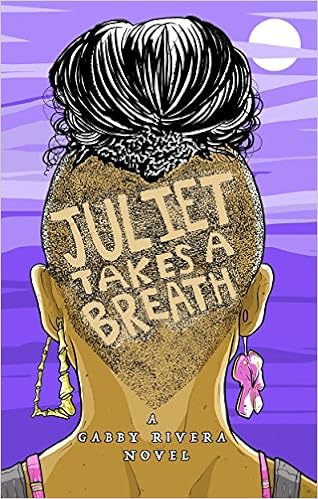
Juliet Takes a Breath by Gabby Rivera (Jan 2016)
Juliet is leaving the Bronx after coming out to her family. In order to help figure out this whole "Puerto Rican lesbian" thing, she is interning with the author of her favorite book, the ultimate authority on feminism, women's bodies, and other gay-sounding stuff.


The Immortal Life of Henrietta Lacks by Rebecca Skloot (Feb 2010)
Documents the story of how scientists took cells from an unsuspecting descendant of freed slaves and created a human cell line that has been kept alive indefinitely, enabling discoveries in such areas as cancer research, in vitro fertilization and gene mapping

Recommendations for Teens:

Written in the Stars by Aisha Saeed (Mar 2015)
Naila's vacation to visit relatives in Pakistan turns into a nightmare when she discovers her parents want to force her to marry a man she's never met.
Eleanor & Park by Rainbow Rowell (Feb 2013)
Set over the course of one school year in 1986, this is the story of two star-crossed misfits - smart enough to know that first love almost never lasts, but brave and desperate enough to try.
American Born Chinese by Gene Luen Yang (Oct 2007)
Alternates three interrelated stories about the problems of young Chinese Americans trying to participate in the popular culture.


Forbidden by Kimberley Griffiths Little (Nov 2014)
Devastated by her betrothal to a violent boy she does not love, Jayden is forced to accept her fate as her ancient Mesopotamian tribe moves to the Summer Lands, where she falls for a mysterious youth from the Southern Lands. Continue the story with Banished.


Gracefully Grayson by Ami Polonsky (Nov 2014)
Grayson, a transgender twelve-year old, learns to accept her true identity and share it with the world.


Shadowshapers by Daniel Jose Older (June 2015)
When her summer plans are interrupted by creepy supernatural phenomena, Sierra and her artist friend uncover the work of a magic-wielding killer who believes Sierra's family is hiding a powerful secret.

The Wrath & the Dawn by Renee Ahdieh
In this reimagining of The Arabian Nights, Shahrzad plans to avenge the death of her dearest friend by volunteering to marry the murderous boy-king of Khorasan but discovers not all is as it seems within the palace. Continue the story with The Rose & The Dagger.
  

None of the Above by I.W. Gregorio (Apr 2015)
After being elected as homecoming queen and engaging in a first sexual encounter with her boyfriend, Kristen discovers that she is intersex and possesses male chromosomes, a diagnosis that is leaked to the whole school, throwing Kristin's entire identity into question.
Recommendations for Children:


Wonder by R.J. Palacio (Feb 2012)
Born with a facial deformity that initially prevented his attendance at public school, Auggie Pullman enters the fifth grade at Beecher Prep and struggles with the dynamics of being both new and different. Hear from the other characters in Auggie & Me: Three Wonder Stories.
Esperanza Rising by Pam Munoz Ryan (May 2002)
Esperanza and her mother are forced to leave their life of wealth and privilege in Mexico to go work in the labor camps of Southern California, where they must adapt to the harsh circumstances facing Mexican farm workers on the eve of the Great Depression.
Wonderstruck by Brian Selznick (Sept 2011)
Having lost his mother and his hearing in a short time, twelve-year-old Ben leaves his Minnesota home in 1977 to seek the father he never knew in New York City, and meets there Rose, who is longing for something missing from her life. Ben's story is told in words; Rose's in pictures.


Alvin Ho: Allergic to Girls, School, and Other Scary Things by Lenore Look
A young boy in Concord, Massachusetts, who loves superheroes and comes from a long line of brave Chinese farmer-warriors, wants to make friends, but first he must overcome his fear of everything. Be sure to check out the entire series.

George by Alex Gino (Aug 2015)
Knowing herself to be a girl despite her outwardly male appearance, George is denied a female role in the class play before teaming up with a friend to reveal her true self.

Jacob's New Dress by Sarah Hoffman (Mar 2014)
Jacob, who likes to wear dresses at home, convinces his parents to let him wear a dress to school too.
Freedom in Congo Square by Carole Boston Weatherford (Jan 2016)
A poetic tribute to a lesser-known event in African-American history describes how after working for more than six days, slaves in 19th-century New Orleans were permitted to congregate in Congo Square to sing, dance and put aside their trouble for a few hours.

Friday, February 12, 2016

Introducing Spoilers, Sweetie!

We are excited to announce the launching of our spin-off blog, Spoilers, Sweetie!


Back in December, we wrote a blog post talking about a crazy idea we had: writing spoilers for award winning books. We were excited about the possibility, but we needed people - LOTS of people - to help us read and spoil books to make this happen. 

I am proud to say that the librarian community has stepped up and joined us. Over the past two months, everyone has been hard at work reading and writing spoilers. While they were doing that, I was trying to find a way to add this new segment to our blog. It soon became clear, though, what we were doing was bigger than what we could do here. So, we created a new blog dedicated specifically to spoilers.

So, please say hello to http://spoilers.5minlib.com! (You can also get to it via the tab up top, on the desktop version of our website.)


It is much different than our 5minlib setup. We wanted the awards to be the focus, so we choose a flipcard style to make it easy for you to navigate through it and find the awards that fit the audience you are serving.

If you prefer to search by age group, announcement years, or specific awards, you can easily do so by clicking "By Category".


And when you click the flipcard to go to the blog post, you'll be pleased to know that all spoilers are hidden by a grey box, so you won't accidentally see any spoiler you don't want to read! You must click on the box for the reveal:


We will be posting new spoilers as each award is completed. If you don't want to miss a post, make sure to follow us by email or RSS feed, located on the right side of the blog.


We are covering all awards for all age groups, but we can only post the awards for which people are writing spoilers. If you enjoy reading and/or find these spoilers helpful, please consider joining our Spoilers, Sweetie team! As you can see from the Book Awards Calendar we shared two weeks ago, there are many books to spoil!

Join our Spoilers, Sweetie Team!

If you are interested in joining our Spoilers, Sweetie team, please fill out the form. You will get to choose what book you want to read and you'll have 4 weeks to read the book and submit the spoiler. It is that easy! Since we are giving everyone a month to submit, progress is slow. The more people participating, the more spoilers we can share! We especially need adult literature readers.


Special Thank Yous

I'd be remiss if I didn't mention a few people who were invaluable to getting this new blog off the ground. I can come up with the ideas, but without these people, Spoilers, Sweetie! wouldn't have become a reality. So, thank you to my husband, who is the technical genius behind our new blog. He helped me figure out how to modify it to fit our needs, most especially how to cover the spoilers so no one accidentally reads the wrong description. I also must share a shout-out to Kat, my former colleague and fellow 5minlib writer. She knew from day one we probably would need a new blog and was my sounding board to figure out the design. I am also excited to announce that Tegan, Amanda, and Nathalia has join our Spoilers, Sweetie Staff and will be a huge help with keeping the process moving along. I couldn't do this without any of you. Thank you so much!

Friday, February 5, 2016

Patrons Under the Influence of Drugs: What Libraries Can Do About It


One topic you don't hear too often is what to do about patrons who come in under the influence of drugs. At our recent YA Collaborative Group meeting, we invited two Community Police Officers to talk to a room full of teen and youth librarians about this important topic. They shared some great tips that I'd like to share with all of you, too.


  1. No matter how small your library, you are not immune from the drug epidemic

  • Across the United States, we have an opioid crisis. So much so that Marijuana isn't even much of a concern anymore. 
"Prescription opioid overdoses now kill more people in the United States every year than all other drugs combined, including illicit drugs. Collectively, drug overdoses are now the leading cause of death in the majority of states and kill more Americans every year than car crashes." (ncsl.org, 11/24/2015)


2. Partner with your community officers or school resource officers.

  • You can ask your local law enforcement for regular walk-throughs to your library to see what's going on and to get to know patrons and staff.
  • If they unable to visit frequently, at least get their contact information. If you suspect a patron is using drugs but have no proof, you can still call and ask them to have a chat with the patron, especially if they are a teen/child. Chances are, they are already on the police's radar.
  • Due to this crisis, thirty states have passed drug overdose immunity and good Samaritan laws. Basically, law enforcement is shifting their focus from arresting people for drug crimes to getting them the help they need. So now, if you call 911 for a drug overdose (for you or someone you are with), you won't be charged for low level drug possession and use offenses. They are hoping this change will encourage more people to seek help when they need it. (ncsl.org, 11/24/2015) 
    • So in these states, don't worry about getting someone "in trouble". That isn't the focus anymore.
    • Feel comfortable in trusting your gut -- if something feels off, you are most likely right. Asking for police to come in for a chat isn't going to hurt anything, and that's what community police officers do. (Please call the main office line and not 911 for non-emergency matters.)
    • People under the influence of drugs will often try to refuse medical attention because they don’t want to be arrested for possession.  It’s important that they know about the drug overdose immunity and get the medical help they need.
Image from http://www.ncsl.org/research/civil-and-criminal-justice/drug-overdose-immunity-good-samaritan-laws.aspx

3. Know what to look for:

Symptoms of opioid use/overdose:

  • Pupils are like pin-points.
  • Person is lethargic.
  • Person may collapse (people suffering from an overdose usually die from respiratory failure – they may have a pulse, but they're not breathing).
  • Excessive scratching.
  • Keep in mind that people with certain medical conditions might display similar symptoms when they are experiencing an issue related to their condition (such as diabetic shock, so you should check for an insulin pump or medic alert bracelet).
  • Recognizing Opioid Overdose
  • Prescription Painkiller Addiction Effects, Signs & Symptoms

Synthetic marijuana is also becoming an issue:

  • It’s technically legal.
  • It can be purchased at some convenience stores.
  • It can produce really bad effects.
  • People under its influence tend to exhibit very bizarre behavior.
  • Synthetic Marijuana

4. What to do if someone in the library is experiencing (or appearing to experience) an overdose:

  • Call 911 immediately.
  • If their heart is still beating but they are not breathing, you can use a Narcan (a nasal spray that is used to reverse the effects of opioids).
    • Narcan can be purchased over the counter at stores such as CVS and Walgreens.
    • It costs about $30.
    • It’s safe to use even if turns out the person is not experiencing a drug overdose. (There are no ill effects)
    • The effects are only temporary!  It lasts about 30 minutes so the person would still need immediate medical attention.
    • After administered, the person will most likely be combative when they first revive because they will be confused as to what’s happened.
  • There is some concern that towns might be sued if they administer this to a person without their consent, but the officers said that the Good Samaritans Law should protect from any lawsuits. 

5. Behavior you should look for if you suspect someone is dealing or hiding drugs:

  • They keep hold of their stuff at all times.
  • They walk around a lot (in and out of rooms, going into the bathroom frequently, etc.).
  • They use their cell phones a lot.
  • They’re scratching themselves a lot.
  • If you suspect that a patron has a drug problem, don’t hesitate to contact officers (especially Community Officers and School Resource officers) so that they can privately talk with them to try to help them.


6. Did You Also Know...?

  • You can order professional brochures on drugs and other topics from samhsa.gov for just the cost of shipping. They also provide free downloads, too.
  • Some schools have allowed Teen, Children, and Youth Librarians to participate with teachers during their professional development days to learn more about these kinds of topics. Free training! And possibly, a chance to network with more people in your community.
  • Reach out to drug rehabilitation centers for any possible trainings. Our local center is actually offering a free Narcan training next week and giving out two free doses of Narcan to all participants. That's a $60 value!
  • Please consider keeping a Narcan on hand. They last a long time, and you could possibly save a life.
  • This is a great chart about the different types of drugs and their indicators: Cumulative Drug Symptomatology Matrix

Special thanks to Amanda Maclure for taking such great notes at our YA Collaborative Group Meeting and letting me use them here. Also, thank you to our local police department for coming out and talking to us about this.

Friday, January 29, 2016

Spotlight on Diversity: Are Your Library Shelves White-Washed?


As librarians, we strive to build a balanced collection that circulates, from a good mix of different genres to coverage of the big topics. This may lead to problems, though, if you are not paying a close enough attention to diversity. The Cooperative Children's Book Center just published results to their survey about diversity in the publishing world. The results are eye opening.

 Let's look at this a little closer and why this affects librarians:

1. Where are you buying your books?

According to the survey, the publishing world is primarily consisted of straight White Caucasians. That means the editors who are selecting the books, the advertisers who are selling them, the writers who are writing them-- every step of the process is dominated by this one segment of our population. And as such, there is little wonder why we don't have diversity in our literature. Up until recently, this was just accepted. Main characters are just white. If they were people of color, their images on covers were white-washed so the books would "sell". People are trying to make changes and bring this issue to the forefront, but it is very evident that it needs to happen on all levels. Public libraries - any library - is not immune to this, either.

Unfortunately, nothing ever happens fast. In fact, over the past 20 years, despite diversity growing in our population here in the US, diverse books have remained at 10% of all books published each year. It looks even worse when you divide up that 10% to show the individual categories that fall into diversity: LGBTQIA, people of color, gender diversity, people with disabilities, and ethnic, cultural, and religious minorities (as defined by http://weneeddiversebooks.org). That's beyond pitiful.


WHERE IS THE DIVERSITY IN PUBLISHING? THE 2015 DIVERSITY BASELINE SURVEY RESULTS

2. Where are you getting your reviews?

Do your reviewers read diverse books? Focusing on only the big journals may not be your best source of information to find lots of new diverse books. 


Some great places to check out:

3. What books are you buying?

Are you only ordering diverse books that get starred reviews? Publishers will never publish more diverse books if we're not buying them. Of course, we don't want to fill our shelves with mediocre books; however, if we are willing to buy mediocre stories from white authors, we should be willing to buy mediocre stories from diverse authors, too. It isn't fair to only hold diverse authors to a higher standard.

4. What books do you promote?

What books do you have on your displays? Do you have book lists that make it easy for people to find diverse characters? Do you make sure diverse books are included in all of your lists?

Some Suggestions:

Stay tuned for Allie's Diverse Book Lists!
ALA awards (Many focus on diverse reads!)
Serving Diverse Teens @ Your Library
The Hub
End of the Year Booklists by We Need Diverse Books
1000 Black Girl Books Resource Guide by GrassROOTS Community Foundation

5. What books are you deleting?

Since it is a lot of work to find diverse books to order, can you imagine being a patron trying to find them to read? If we're not promoting them, people may not even know about them. When you are weeding your shelves, pay attention to how many diverse books you're taking out. Are you deleting more than you are buying?

6. What books are you reading?

We all understand the importance of diversity in literature. I don't have to list out to you why we need these books on our library shelves. However, I am embarrassed to admit that when I actually looked at my own reading history, nearly all of the books I have read were white-washed and written by white authors. I wasn't making an active effort to read these great diverse books, so I had fallen victim to the unconscious bias. I hate to say "victim" because I'm not the type to be a victim of any type if I can help it, but the problem was - is - that so many of us don't even realize it's happening. I thought I was doing well - I was reading award winners and top reviewed books - but my sources weren't strong in diversity and I was influenced by the book buzz. Now that I fully understand how deep our white-washed literature goes, I'm realizing that I need to be part of the change. I need to read more diversity, turning it from a buzz word to just a part of my every day reading life. We all need to, if we want to make any strides to a more inclusive literature.

So, how would you answer these questions if someone were to ask:
1. How many books have you read which featured a diverse character?
2. How many many books have a person of color as the main character?
3. How many books were written by non-Caucasians?

If your answers were not many, it might be time to #colormyshelf.

Friday, January 22, 2016

The Ultimate Book Awards Calendar


In preparation for Spoilers, Sweetie, I hunted for a list of book awards, arranged by the month they are announced. I had no luck, so decided to create one and share it with you all. Enjoy! They are divided by age groups (Adults, Teens, and Children), so you can easily find your target audience.

Adult Awards


January

ALA Awards (Midwinter)
National Book Critic’s Circle Finalists
Costa Book of the Year (UK & Ireland)
BCALA (Black Caucus)
Carnegie Medal (ALA)

February

GRAMMYs: Best Spoken Word Album
Nebula shortlist

March

National Book Critics Circle Awards
Canada Reads
Bram Stoker Awards (Horror)

April

L.A. Times Book Prize
Pulitzer Prize
Benjamin Franklin Awards
Edgar Awards (Mystery)

April/May (may come out either month)

IACP Cookbook Awards
Pen/Faulkner
Agatha Awards (Traditional Mystery)
James Beard Cookbook Awards

May

Audies (Audiobooks and spoken word entertainment)
Christian Book Awards
Nebula Award (Sci-Fi/Fantasy)
Man Booker International Prize (Translated Fiction)

June

Women's Prize for Fiction, Bailey's (formerly The Orange Prize)
Lambda (LGBT)
Locus Awards (Sci-Fi)

July

Eisners (comics, announced at ComicCon)
International Thriller Writers Award
RITA / Golden Heart Awards (Romance)
Shirley Jackson (Psychological Suspense, Horror, and the Dark Fantastic)
Man Booker Prize Longlist (Longlist, July; Shortlist, Sept)
Mythopoeic Award (Fantasy)

August

Hugo Award (Sci Fi/Fantasy)

Sept

Man Booker Prize Shortlist (Longlist, July; Shortlist, Sept)
National Book Awards (Longlist)
Christy Finalists (Christian Fiction)

October

Giller (Shortlist)
Anthony Award (Crime Fiction/Mystery)
Nobel Prize in Literature
Kirkus Prize
Man Booker Prize
National Book Awards (Shortlist)

November

World Fantasy
Giller (Winner)
National Book Awards
Costa Book Shortlist (UK & Ireland)
Christy (Christian Fiction)

December

PEN Literary Awards Longlist
Goodreads Choice (by readers)

Teen Awards


January

ALA Youth Media Awards (Midwinter)

April

IACP Cookbook Awards
L.A. Times Book Prize
Benjamin Franklin Awards

May

Edgar Awards (Mystery)
Children's Choice Book Awards - (voted by Children and YA)
Andre Norton Award (a Hugo Award; Sci Fi/Fantasy)
Boston Globe Horn Book Award
Audies (Audiobooks and spoken word entertainment)
Christian Book Awards

June

Lambda (LGBT)
Locus Awards (Sci-Fi)

July

Eisners (comics, announced at ComicCon)
RITA / Golden Heart Awards (Romance)
Mythopoeic Award Finalist (fantasy)

September

National Book Awards: Young People's Literature Longlists


October

November

National Book Awards Winners
Christy (Christian Fiction)
Costa Book Shortlist (UK & Ireland)

December

Goodreads Choice (by readers)

Children Awards


January

ALA Youth Media Awards (Midwinter)
Phoenix Award (Chapter book/Picture Book)
Charlotte Zolotow Award (Picture Book)
ALA Rainbow List (GBLT)
Scott O'Dell Award (Historical Fiction)
Costa Children's Book Award (UK & Ireland)

February

Cybils Awards
American Indian Library Association (Every two years; 2016 Current List)

March

Walter Dean Myers Award (Presented by We Need Diverse Books)

April

IACP Cookbook Awards
Benjamin Franklin Awards
Jane Addams Peace Awards
Edgar Award

May

Children's Choice Book Awards
Boston Globe Horn Book Award
Audies (Audiobooks and spoken word entertainment)
Christian Book Awards

June

Lambda (LGBT)

July

Eisners (comics, announced at ComicCon)

October

Kirkus Prize: Young Readers

November

Costa Book Shortlist (UK & Ireland)

December

Goodreads Choice (by readers)

Special thanks to Krystal Smith for help with compiling this list!